Japan’s food factories produce tons of edible material that never reaches consumers. At the same time, livestock producers depend on feed made partly from imported ingredients.
Sugayo Co. saw an opportunity to connect the two.
But the idea was not simply to collect discarded food and feed it to pigs.
Sugayo, a livestock and feed company based in Akita Prefecture, began pig production in 1991. In 2005, it opened a food recycling plant and started using eco-feed in its pig operations. Today, the company combines food recovery, feed production, transport, pig farming and pork marketing in one system.
The materials entering that system are important.
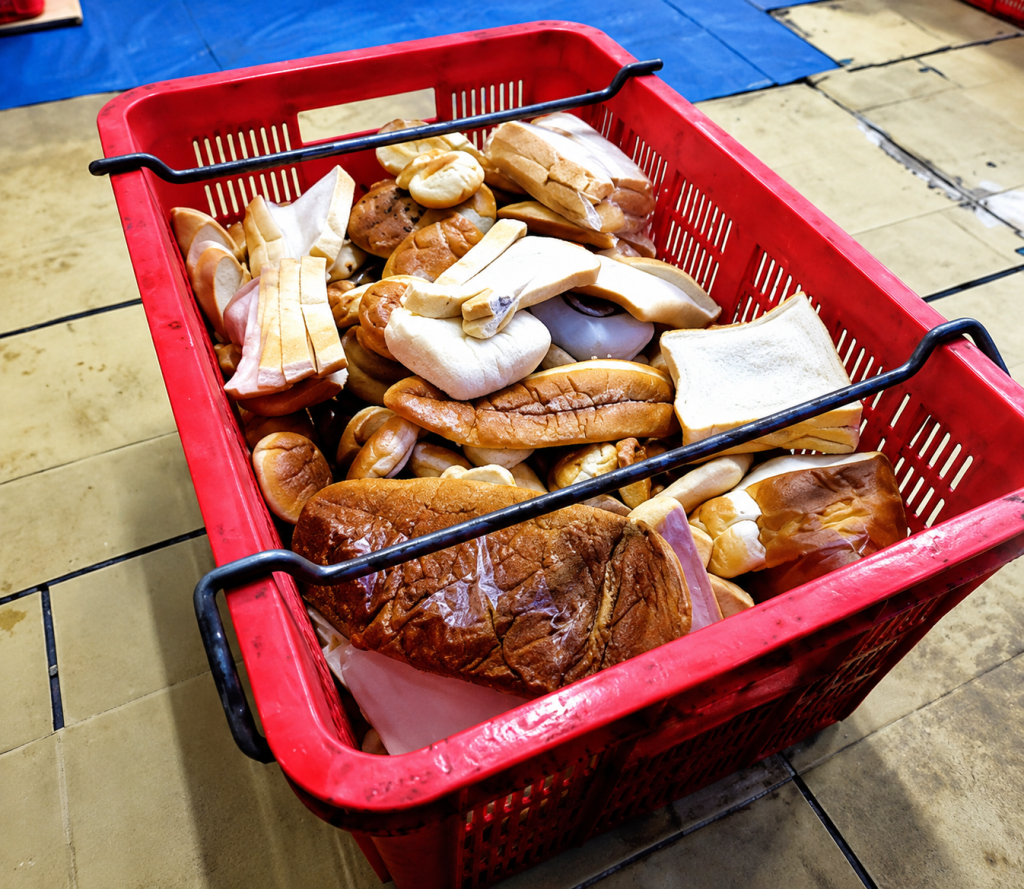
Sugayo does not accept post-consumer plate waste or indiscriminate food residues. It says its recycling operation takes edible materials from food manufacturers, including off-spec products, surplus ingredients and excess inventory. Materials with safety or hygiene concerns are excluded.
Its feed ingredients include whey, bread and dough, noodles, tofu and okara, sake and shochu lees, soybeans, rice bran and juice-processing residues.
That distinction is the first piece of Sugayo’s model.
Cheap material does not mean cheap feed
Sugayo’s recycling plant receives an average 30-50 tons of food surplus a day.
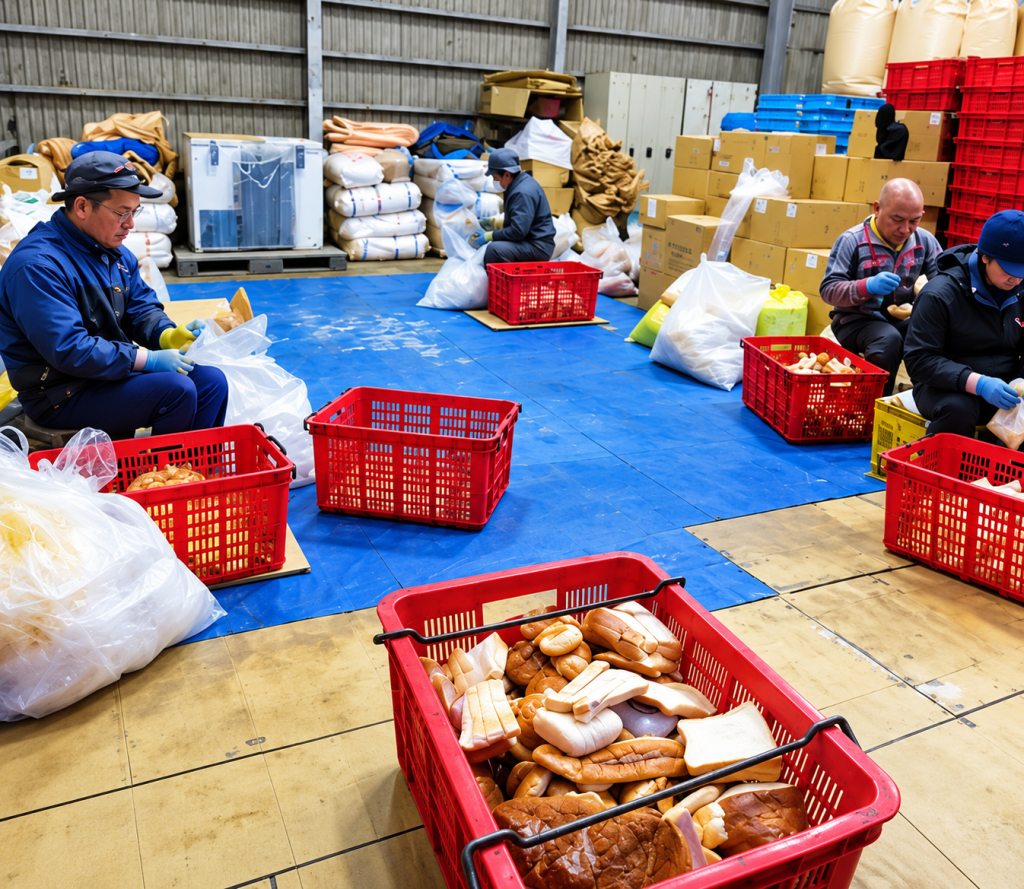
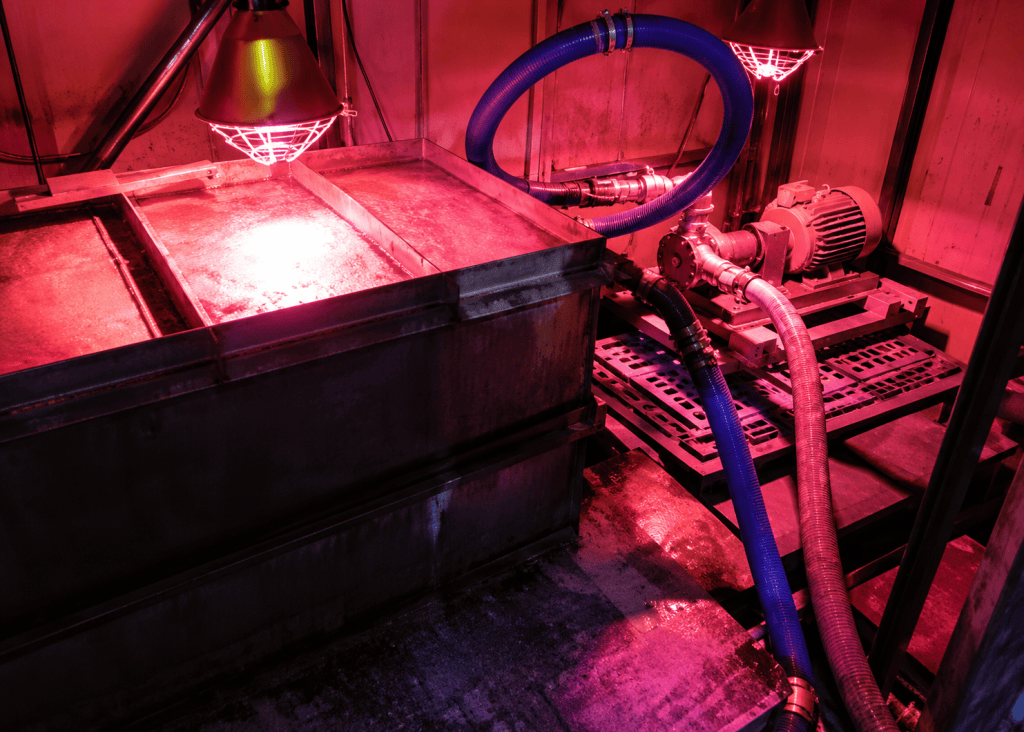
Some materials arrive packaged. Workers open and sort them, including by hand. Solid materials are then ground and mixed.
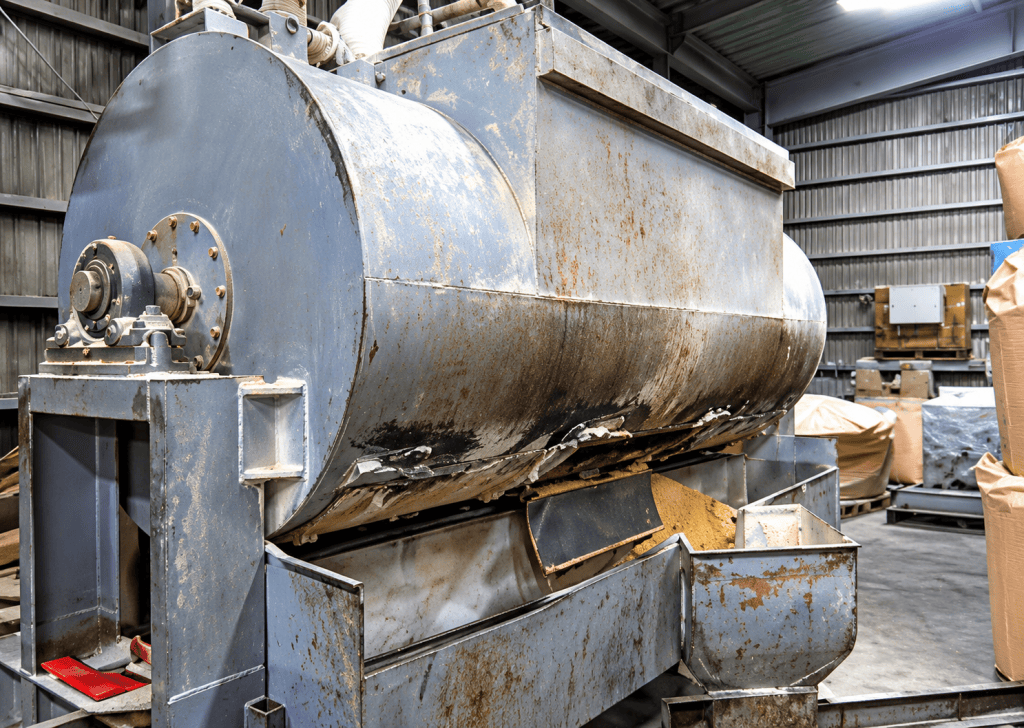
Sugayo produces two types of eco-feed: heat-treated feed and liquid feed fermented with lactic-acid bacteria. For the liquid feed, ingredients such as whey, bread, noodles and shochu lees are ground, mixed and fermented.
This is different from simply collecting food scraps, cooking them and feeding them to pigs. For its fermented liquid feed, Sugayo sets a shipment standard of pH 4.5 or below. The finished feed undergoes at least four checks before being released from the recycling plant.
Only then does it travel to the pigs.
Sugayo even handles this part itself. Its own tanker trucks deliver the liquid feed to its farms, keeping another part of the chain under company control.
The system looks attractive because its raw materials are extraordinarily cheap.
A detailed case study by Japan’s Agriculture & Livestock Industries Corporation put Sugayo’s raw-material cost at only JPY 0.5-1/kg (equivalent to roughly USD 3–6/ton).
But that was not where most of the money went.
Labour was the largest feed-production cost, partly because packaged foods had to be opened manually. Energy was another major expense, with materials requiring grinding, heating and mixing before fermentation.
In other words, Sugayo did not discover free feed.
It built an industrial process around a cheap resource.
And according to the same case study, the economics still worked: using a mixture of eco-feed and compound feed reduced overall feed costs by about 25% compared with finishing pigs entirely on compound feed.
Then there is the question of scale
Collecting food materials, sorting them, operating a recycling plant, producing fermented feed and running tanker trucks would make little sense without enough animals to consume the output.
Sugayo has enough pigs for that.
The latest detailed production figure available puts its operations at 86,000 market pigs annually, including 58,000 in Akita, Yamagata and Iwate and another 28,000 in Hokkaido. Around 70% of its market pigs at the time were produced using eco-feed and marketed as branded pork.
Sugayo has since expanded and reorganised its operations, including a 2024 merger with Hokkaido Hidaka Farm and Denen. Its current operations span Hokkaido, Aomori, Akita, Yamagata and Iwate, although the company does not publish a newer total pig-production figure.
Scale therefore appears to be more than a consequence of the model. It is part of what makes the model possible.
Sugayo has enough pigs to provide a steady destination for the feed it produces. It does not have to manufacture an unconventional liquid feed and then search for livestock producers willing to buy it.
It controls the destination.
More than feeding food scraps
That distinction has not always been obvious.
Sugayo says liquid feeding was initially confused in Japan with the old practice of feeding pigs food scraps. Farmers and customers questioned whether the system would produce inconsistent feed and poorer pork.
The company explicitly rejects that comparison.
Its liquid feed is produced from selected food-industry materials, processed and fermented under controlled conditions and subjected to a defined pH standard before shipment. Sugayo says it spent about three years developing its own eco-feed production method.
The pigs themselves also follow a feeding program rather than simply receiving recycled food throughout their lives. Sugayo has described weaned piglets receiving milk replacer followed by dry feed, with liquid feeding introduced later in the nursery period.
The difference is therefore not merely that Sugayo ferments food surplus rather than cooking scraps.
The difference is the system around it.
From unwanted food to branded pork
Sugayo could have stopped at reducing feed costs.
Instead, it took the chain one step further.
Pigs raised with its eco-feed are marketed under its own Eco no Mori Emi Kobuta brand.
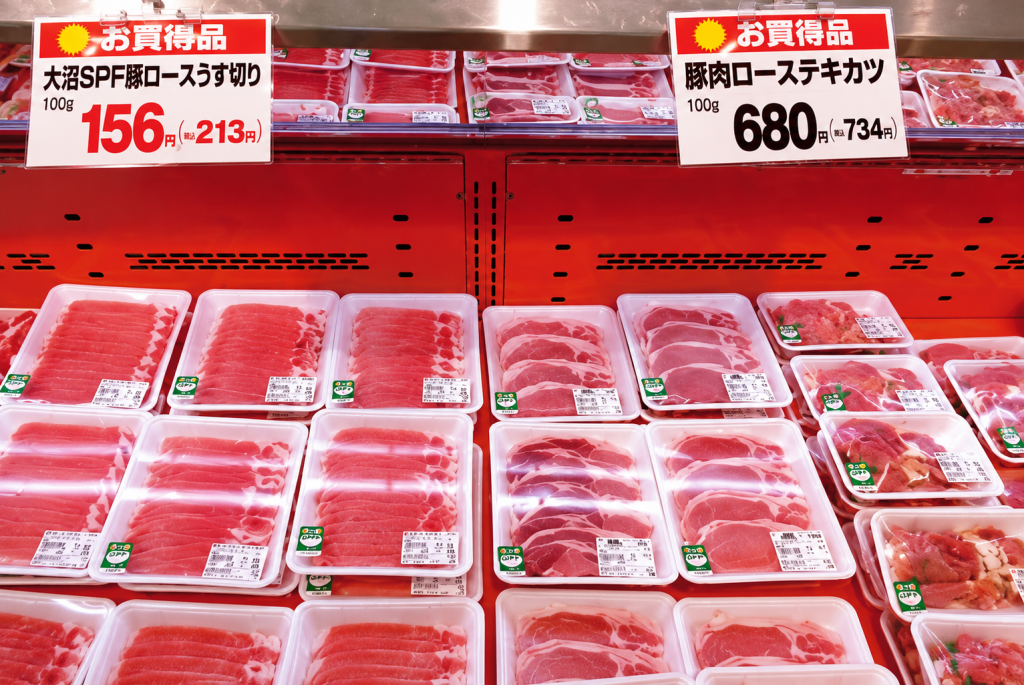
Sugayo presents the pork as a new concept in domestically produced pork, linking the reuse of food resources with Japan’s food self-sufficiency and reduced CO2 emissions from food disposal.
That changes the value proposition.
Food manufacturers have edible materials they cannot sell. Sugayo takes selected streams and turns them into feed. Its farms provide a large, predictable user for that feed. The pigs then turn those recovered nutrients into pork, and the pork gives the circular system a product consumers can actually buy.
The company therefore controls much of the journey:
food recovery → sorting → feed production → quality control → transport → pig production → branded pork.
Sugayo’s model does not show that food surplus is an easy substitute for conventional feed.
It arguably shows the opposite.
The raw material may cost only JPY 0.5-1/kg, but somebody still has to collect it, sort it, process it, control its quality and move it to the animals. Sugayo made that equation work by building enough pig production, and enough control over the chain, to absorb those costs.
The cheap resource is only the beginning. The business model is everything built around it.
By Ha Thu
PigTalks Asia


Leave a Reply