
Vietnam’s live pig market has a small, highly flexible layer that can expand or retreat quickly as market conditions change.
Known locally as nuôi heo gột, or pig refattening, the model is little discussed outside the domestic live pig trade. But its movements can provide another signal of changing supply and demand in the market.
The flexible refattener
Pig refattening starts where conventional fattening is normally ending.
A conventional fattening farm raises pigs over a longer production cycle, typically from after weaning until they reach Vietnam’s market weight of around 90–100kg. Some farms operate their own sow herds and raise the pigs from birth.
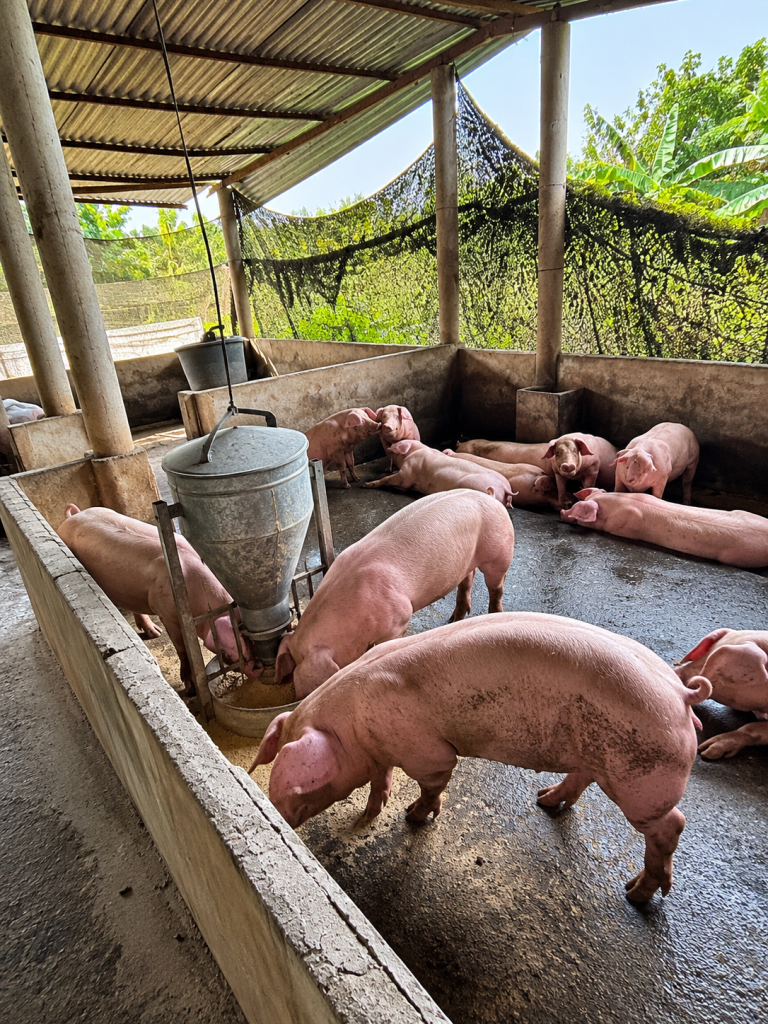
Gột operators enter much later. They buy batches of grown pigs from other producers at around 90–100kg and keep them for about another month, typically targeting heavier pigs of around 130kg or more before selling them.
That difference gives gột operators considerably more flexibility. A conventional fattening farm already has pigs progressing through its production cycle when market conditions change. A gột operator can decide whether to buy another batch at all.
Both fattening farms and gột operators ride many of the same market waves. Live pig prices, feed costs, disease pressure, the availability of suitable pigs and wider market or regulatory changes can all affect their decisions.
But gột is more sensitive to these movements. Its short cycle allows operators to enter, retreat or sell much more quickly as conditions change.
Riding the market waves
That sensitivity was on display between August and October.
In mid-August, demand from gột operators improved in northern Vietnam alongside demand for immediate slaughter. A week later, the direction had changed, with gột pigs being offered more heavily and adding to supply pressure.
The broader pig market was already under pressure. Live pig prices had fallen to around USD 2.2/kg amid seasonally weaker consumption and increased domestic supply. A crackdown on banned substances, including salbutamol, added uncertainty and encouraged some fattening farms to sell pigs earlier.
Feed costs were also rising. Feed prices increased by around USD 6–8/ton in August, followed by another round of increases in September. Major suppliers then announced increases of USD 11–15/ton from October 1.
Gột operators continued moving with the market. In early September, they began buying more pigs, providing some support as pigs from conventional fattening farms were increasingly offered for sale. Within days, gột pigs were also coming back onto the market.
By late September, both conventional fattening pigs and gột pigs were being sold more heavily, while large pigs accumulated in the market.
The direction changed again in October. Gột operators temporarily stopped buying in some areas as prices continued to weaken. By October 14, however, buying had started to return as supplies from conventional farms thinned, helping support a slight recovery in northern pig prices.
These movements do not establish how large Vietnam’s gột segment is. Its temporary and opportunistic nature also makes conventional measures such as farm numbers difficult to apply.
But the repeated switches between buying, selling and waiting offer a glimpse into its nature.
Gột rides many of the same waves as conventional pig production. It simply has more freedom to move with them.


Leave a Reply