
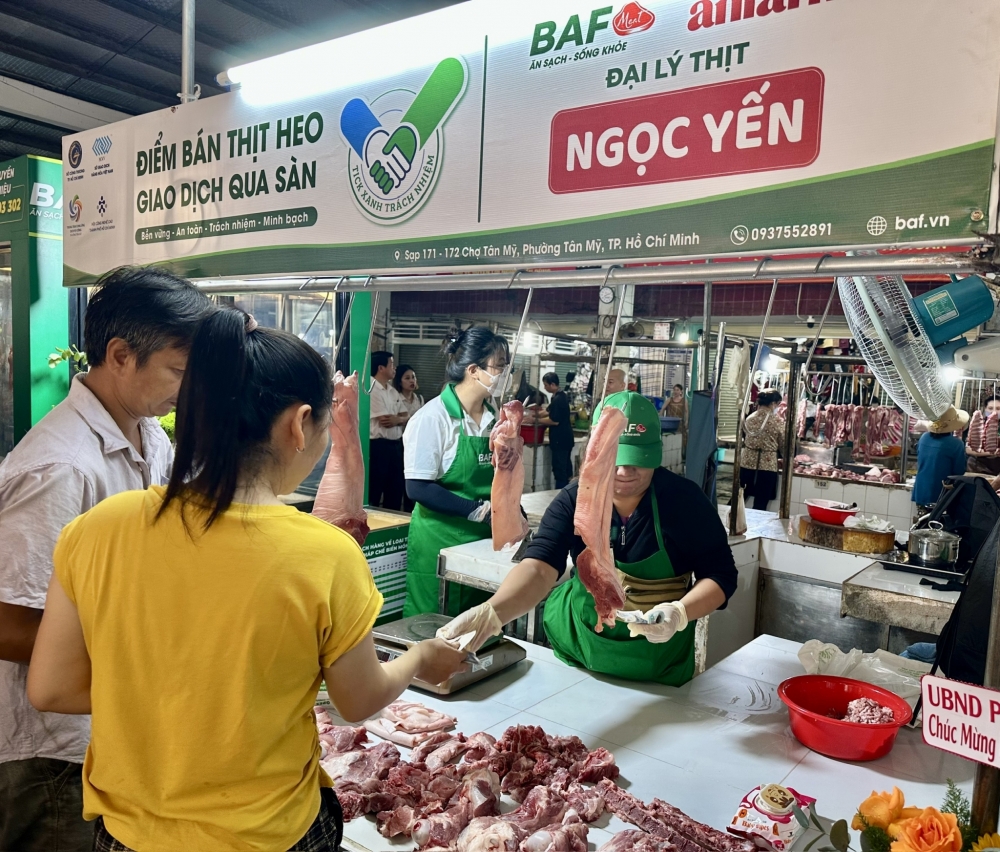
With pork accounting for nearly 64% of livestock product consumption and annual consumption estimated at around 39 kg per person, Ho Chi Minh City is stepping up efforts to improve traceability and digitalize pork distribution as part of a broader strategy to strengthen market transparency and food safety.
The scale of the city’s pork market is one reason traceability has become a priority. As of May 18, approximately 535 tons of pork were traded daily through the Bình Điền and Hóc Môn wholesale markets, with supplies sourced mainly from large livestock companies and provinces in southern Vietnam.
Another driver is the need to improve food safety and quality control. At modern retail outlets, consumers can scan QR codes on pork products to access information on farms, slaughterhouses, food safety certifications, and slaughter dates.
Authorities are also promoting electronic trading to improve market transparency. Since the launch of a pilot pork trading platform on April 6, a total of 3852 pork carcasses had been traded as of May 18, an increase of 1037 carcasses compared with the end of the platform’s first month of operation. Recent trading sessions have recorded volumes exceeding 100 carcasses per day, while more livestock producers and distributors are preparing to join.
Officials and industry representatives said the platform could support market monitoring, improve supply and demand forecasting, and accelerate the digitalization of food distribution. If successfully expanded, the model could also be replicated in other cities, including Hanoi and Da Nang.


Leave a Reply