
Vietnam’s pig sector has invested heavily in genetics over the past decade. Sows with higher prolificacy, larger litters, and improved reproductive potential are now common across commercial farms. Yet, on many operations, these genetic gains have not translated into consistently uniform, high-quality piglets at weaning.
The gap is not purely biological. It is systemic.
Field observations across Vietnamese sow farms point to a combination of structural pressures: high ambient temperatures, disease risk, labour constraints and increasingly stretched sow capacity. Together, these factors create bottlenecks in early-life management that quietly erode productivity, often without being fully accounted for in cost calculations.
Where productivity leaks: access, not output
One recurring issue observed at farm level is not a complete lack of sow milk, but unequal access to it. As sows age, functional teat numbers may decline. At the same time, many medium-scale farms routinely manage litters of 12–13 piglets per sow, exceeding the practical access capacity of the udder.
Smaller piglets are pushed to the margins. They nurse later, grow slower and face higher stress. For sows, prolonged nursing increases fatigue and stress, contributing to body condition losses of 15–20% per parity, and in some cases significantly more when litter pressure is high. These effects ripple forward, affecting sow longevity and subsequent reproductive performance.
Hidden costs in uneven piglets
Across many Vietnamese farms, 10–15% of piglets fall into a “weak or undersized” category. These piglets are often grouped separately, require additional labour and feeding, or are sold early if performance does not improve.
The problem is not that farms ignore these losses, but that they often normalise them. Labour hours, delayed growth and compromised health outcomes are rarely fully priced into production costs. From a system perspective, this is where efficiency quietly drains away.
Supplemental milk as an example, not a silver bullet
In this context, supplemental milk has emerged as one management tool used by farms to reduce early-life pressure. It does not replace sow milk, nor does it fix structural weaknesses on its own. Its practical value lies in redistributing access.
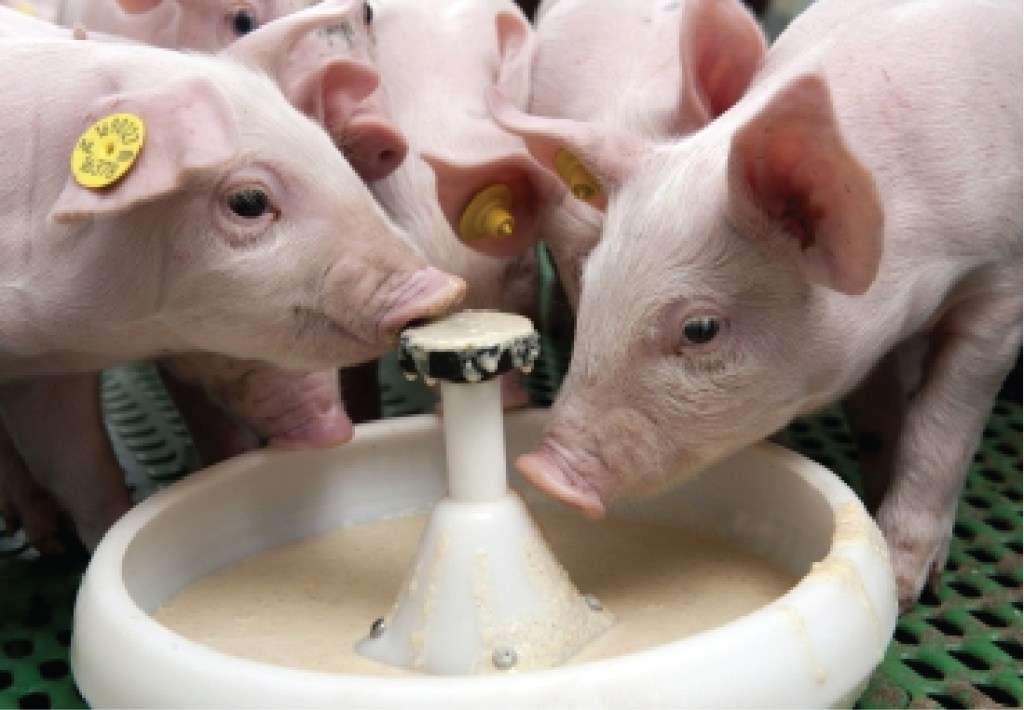
By providing an alternative nutritional point, supplemental milk allows smaller or disadvantaged piglets to avoid direct competition at the udder. Field observations indicate that this can reduce piglet crushing, lower sow stress from extended nursing periods, and improve overall litter uniformity. Importantly, reduced stress also supports sow recovery and can contribute to improved fertility in subsequent cycles.
The broader lesson here is not about supplemental milk itself, but about targeted interventions that stabilise stressed systems, rather than pushing output harder.
Timing and execution matter more than products
One of the most consistent patterns observed in Vietnam is that performance outcomes depend less on the product used, and more on when and how it is applied.
In practice, the most effective use of supplemental milk has been observed during the first few days of the weaning transition, when piglets face abrupt dietary and environmental change. When introduced at this point, often mixed with creep feed, supplemental milk can support feed intake adaptation and reduce stress. Farms applying this approach have reported observable differences in post-weaning weight gain and uniformity, compared with piglets managed without such support.
Crucially, these outcomes only appear when baseline management, hygiene and labour discipline are already in place. Without those foundations, no nutritional input delivers consistent returns.
What this signals to technology and solution providers
For suppliers looking at Vietnam, the takeaway is clear: the opportunity is not in isolated products, but in system-aware solutions.
Vietnamese farms are operating under real constraints: climate stress, labour shortages, high biological pressure and uneven management skills. Technologies that help farms identify bottlenecks, improve timing, reduce labour load or stabilise early-life performance are more likely to deliver value than tools that simply promise higher output.
Supplemental milk, in this case, serves as one visible example of how a well-timed, targeted intervention can protect existing investments in genetics and sow productivity. Many other solutions, from nutrition strategies to equipment and monitoring systems, could play similar roles if aligned with on-farm realities.
A market observed from the field

The insights in this article are drawn from field observations shared by Nguyen Van Ngoc, a Vietnam-based premix manufacturer and distributor of supplemental milk, who works closely with sow farms across different scales. His vantage point offers a practical view of how technologies are actually adopted, adapted or misused at farm level, and where management decisions most strongly influence outcomes.
 pigtalks.asia
Leave a comment