
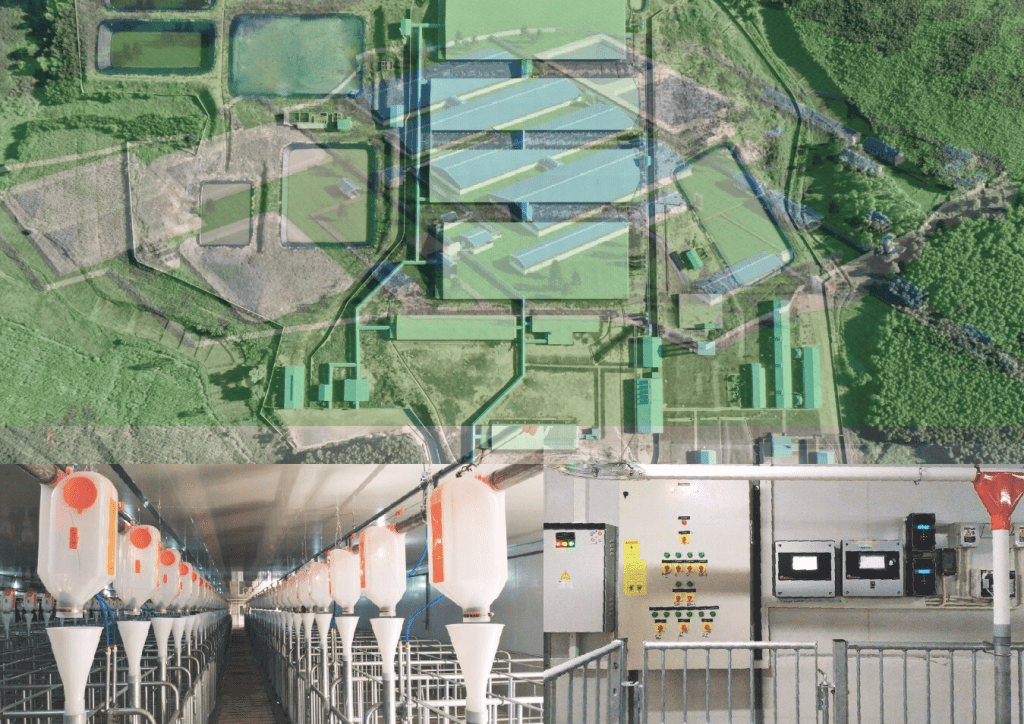
When Muyuan Foods announced Vietnam as its first Southeast Asian investment base following its Hong Kong IPO, the immediate reaction across the industry was curiosity rather than surprise. Vietnam is not short of large pork producers, nor is it an underdeveloped market waiting for its first wave of industrialisation.
What makes Muyuan’s move notable is not the arrival of another major player, but the way it tests an already crowded and layered pork system. Vietnam’s pork sector is no longer defined by entry versus absence, but by how different production models coexist, overlap, or quietly adjust to one another.
This Market Map looks at Muyuan’s Vietnam entry not as a competitive showdown, but as a system-level event: what kind of production model is being introduced, how existing players are positioned, and what early signals suggest about the direction of Vietnam’s pork supply landscape.
The event: Muyuan steps into Vietnam
Muyuan’s overseas expansion follows the company’s Hong Kong listing, which raised around USD 1.4 billion, with a significant portion earmarked for international growth. Vietnam was identified as the company’s first operational foothold in Southeast Asia, supported by a local partnership with BaF Vietnam.
According to public disclosures, the Vietnam project targets an annual output of around 1.6 million pigs once fully developed. While modest relative to Muyuan’s domestic scale in China, the project signals an intention to establish a replicable model rather than a one-off overseas venture.
At this stage, the move remains largely at the planning and early execution phase. Farms are being designed, partnerships structured, and operational assumptions tested. The question is less about speed, and more about fit.
What Muyuan represents as a production model
Muyuan enters Vietnam with a production logic that is already well defined in China: high-density farming, heavy capital investment, standardised processes, and strict internal control over biosecurity and cost structures.
This model prioritises predictability and scale efficiency. It is designed to reduce unit costs through standardisation rather than flexibility, and to perform best in environments where inputs, protocols, and labour can be tightly managed.
In Vietnam, however, such a model must operate within a system shaped by disease volatility, land constraints, regulatory scrutiny, and a diverse mix of production scales. The success of Muyuan’s approach will depend not only on farm-level execution, but on how well this model adapts to external pressures rather than reshaping them outright.
Vietnam as a test, not a blank slate
Vietnam is often described as a growth market for pork, but for large producers it functions more as a stress-testing ground. The country combines strong consumption with persistent disease pressure, fragmented supply chains, and increasingly visible regulatory oversight.
Importantly, Vietnam is not an empty market. Long-established integrators such as CP Group, alongside regional players like Japfa, have spent years building vertically integrated systems adapted to local conditions. Local companies, meanwhile, continue to expand selectively, often through partnerships rather than full integration.
Against this backdrop, Muyuan is not entering a vacuum, but a layered ecosystem where production models overlap rather than replace one another.
Early signals from the wider system
Rather than provoking immediate confrontation, Muyuan’s entry has coincided with a series of positioning moves across the sector. CP Group’s participation as a strategic investor in Muyuan’s IPO places a long-established regional integrator in close proximity to a potential future competitor. At the same time, De Heus has strengthened its downstream exposure in Vietnam through the acquisition of CJ’s feed and pig assets, reinforcing system control rather than pursuing greenfield expansion.
These moves do not point to a single narrative of resistance or alignment. Instead, they suggest a shared emphasis on managing volatility, preserving optionality, and maintaining influence as production models evolve.
What changes, and what doesn’t
What changes with Muyuan’s entry is not Vietnam’s total pork capacity overnight, but the reference point for industrial efficiency and capital intensity. The presence of a highly standardised, scale-driven model introduces a new benchmark against which costs, biosecurity, and management discipline are quietly compared.
What does not change is the complexity of operating in Vietnam. Disease risk remains uneven, land access remains constrained, and demand growth does not automatically translate into stable margins. No single model, regardless of scale, is insulated from these realities.
Open questions for the next phase
Several uncertainties remain unresolved. Can high-density production absorb Vietnam’s disease risk without disproportionate cost? Will regulatory and social pressures place practical limits on further industrial concentration? And can Vietnam’s pork market grow in a way that supports multiple large-scale systems without compressing margins across the board?
Muyuan’s Vietnam project will not answer these questions alone. But it has already made them harder to ignore.
 pigtalks.asia
Leave a comment