Vietnam’s upcoming livestock inspections are often read as a compliance check on large foreign-invested producers. In reality, they are evolving into a system test of how integrated livestock production functions under a tightening regulatory framework.
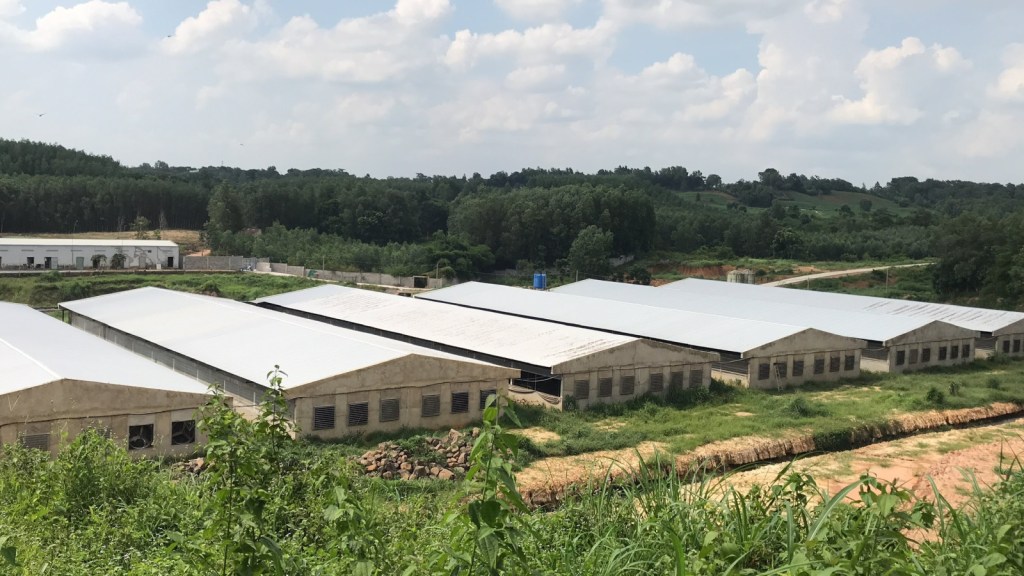
As transition periods under the Livestock Law 2018 come to an end and enforcement intensifies in 2026, inspections are formally directed at major integrators such as CP Vietnam, CJ Vina Agri and Japfa Comfeed Vietnam. However, compliance is no longer assessed at the level of individual facilities alone. Environmental permits, water-use management, biosecurity distances, veterinary records and traceability systems are increasingly reviewed across linked production networks, including contract and satellite farms.
This shift is not driven by a change in inspection targets, but by the structure of modern livestock systems. Integrators remain legally accountable, yet operational risk is distributed unevenly along the chain. Many contract farms were established under earlier zoning rules, operate with incomplete environmental documentation, or rely on manual processes that are now incompatible with current standards.
Recent company actions illustrate this dynamic. CP Vietnam has prioritized the completion of environmental certifications following penalties imposed in 2024, while reinforcing technical training for contract farms. Japfa Comfeed Vietnam has reportedly paused or closed non-compliant sites to allow upgrades, alongside accelerating digital monitoring tools. CJ Vina Agri, after being required to suspend contracts with farms lacking environmental permits, has focused on helping these operations regularise documentation and resume production.
What emerges is a filtering mechanism rather than a punitive sweep. While inspections are directed at integrators, the compliance burden is transmitted through the system. Contract farms that can absorb higher environmental and biosecurity requirements remain integrated; those that cannot face consolidation or exit.
In that sense, the inspection cycle tests not just individual companies, but whether Vietnam’s livestock sector can operate as a coordinated system under uniform rules. The outcome will shape how the industry restructures well beyond the inspection period itself.
 pigtalks.asia
Leave a comment