
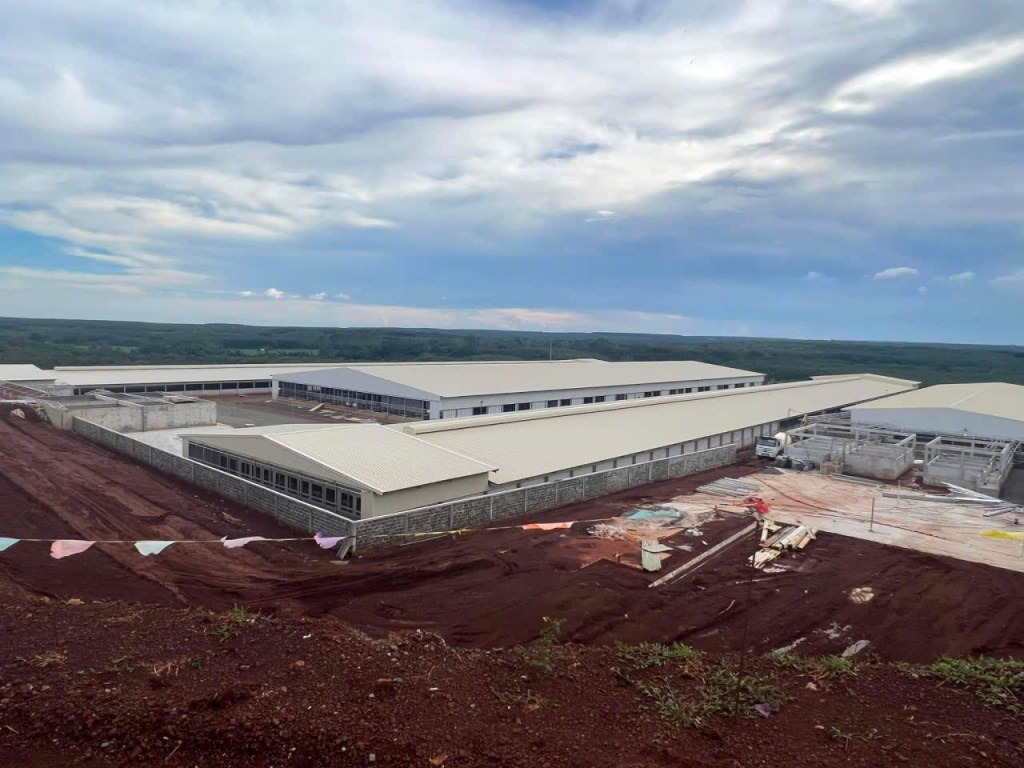
For more than a decade, Vietnam’s livestock sector has been characterised by the steady decline of small-scale farms. Disease pressure, ageing labour, tightening biosecurity requirements, and volatile input costs have consistently eroded the viability of backyard and semi-backyard production. This trend has been widely documented and is often framed as an inevitable outcome of modernisation.
However, recent field observations and provincial data suggest a more nuanced shift: while smallholder numbers continue to fall, the pace of decline has slowed in 2023–2024. This is not a sign of renewed competitiveness among small farms, nor a reversal of structural consolidation. Instead, it reflects the stabilising role played by a segment that is often overlooked in policy debates and market reports — middle-scale commercial farms.
From polarisation to buffering
Much of the prevailing narrative assumes a linear transition: smallholders exit, large-scale integrators expand, and production concentrates rapidly. In practice, Vietnam’s livestock sector has not polarised as quickly as expected. One key reason is the expansion of middle-scale farms operating between family-scale production and fully integrated systems.
These farms typically manage:
- 1000–5000 pigs, or
- 20,000–60,000 poultry per cycle,
and are often independently owned, professionally managed, and commercially oriented, but not vertically integrated.
Rather than displacing smallholders outright, this mid-tier has absorbed market share incrementally, acting as a buffer between fragmented small farms and fast-expanding integrators.
Preserving the local production ecosystem
The importance of middle-scale farms lies not only in their production volume, but in their position within local supply networks.
Unlike large integrators, mid-scale farms:
- Continue to buy feed through local distributors
- Rely on independent service veterinarians
- Sell through local traders, brokers, or small slaughter points
- Maintain informal credit, labour, and logistics relationships within the province
These are the same channels that smallholders depend on to remain active.
As long as middle-scale farms remain viable and independent, these local ecosystems stay alive. Feed distributors continue to operate at scale; traders continue to aggregate animals; service providers maintain routes and client bases. Smallholders, though weakened, are still able to “plug into” this system.
In this sense, small farms are not surviving because they have become more efficient, but because the economic environment around them has not collapsed.
| Segment | Estimated share | What is changing | What is not changing |
| Integrators / FDI | ~60–70% | Rapid scale expansion; stronger disease control and cost optimisation | Market leadership through integrated 3F systems (Feed–Farm–Food) |
| Mid-scale professional farms | ~10–12% | Gradual shift toward linkage models; higher average farm size (≈5,000 head/farm) | Buffer role within local production and supply ecosystems |
| Smallholders | ~30–35% | Accelerating exit due to environmental and biosecurity constraints | Dependence on local channels (traders, feed agents, small slaughter points) |
A slower, more layered transition
This buffering effect helps explain why smallholder exit has slowed rather than accelerated. Where middle-scale farms are present in sufficient numbers, consolidation proceeds in layers, not leaps.
Without this mid-tier, the system would likely face a sharper break:
- Local traders would be displaced by integrator procurement
- Small slaughter points would close
- Feed and veterinary services would consolidate upward
- Remaining smallholders would lose access to markets and exit rapidly
Instead, middle-scale farms have unintentionally created a holding pattern, slowing the rate at which smallholders are pushed out, even as the long-term direction of structural change remains unchanged.
Implications for Market Strategy and Policy
This dynamic carries important implications for companies and policymakers:
- For suppliers (feed, additives, equipment, services), middle-scale farms are not just customers — they are anchors that sustain wider demand pools.
- For integrators, rapid expansion into regions with strong mid-scale presence may face more resistance and slower consolidation than expected.
- For policymakers, preserving a functional middle tier may be more effective in managing social and economic transition than attempting to “save” smallholders directly.
The slowing decline of small-scale farms should not be misread as a recovery. It is a sign that Vietnam’s livestock sector is transitioning through an intermediate phase — one where the middle layer plays a quiet but decisive structural role.
Understanding this layer is essential for anyone trying to read where the market is heading next.
 pigtalks.asia
Leave a comment