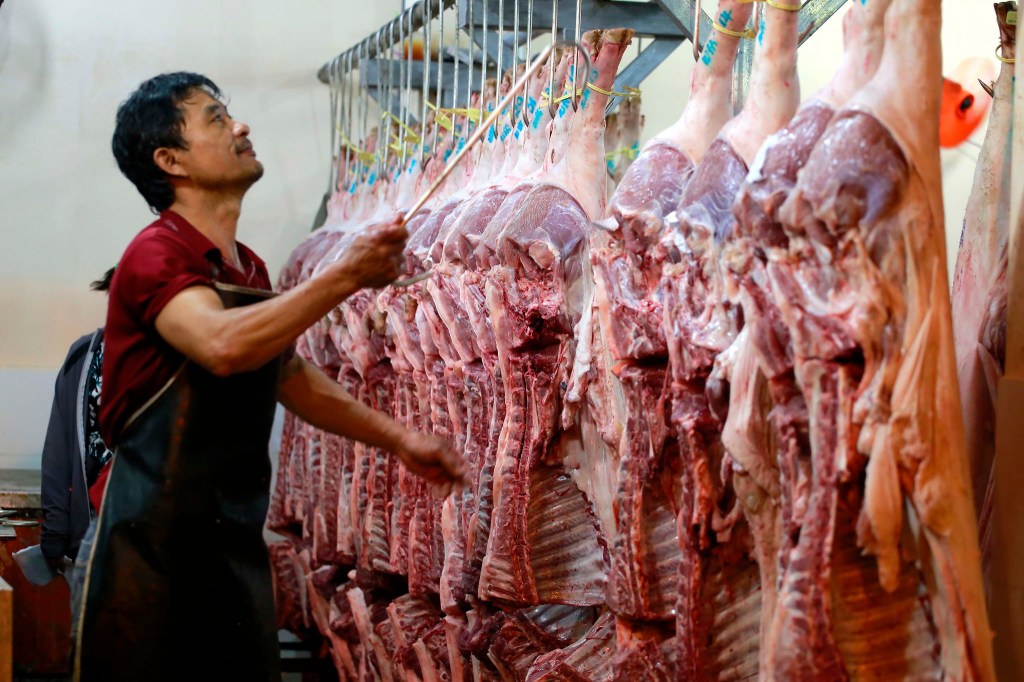
Vietnam’s rising pork prices are often read as a simple good-news story. Live pig prices are climbing ahead of Lunar New Year, supply looks tight, and producers appear to be entering a more favourable cycle.
But price alone does not explain who actually benefits.
Large integrated players such as Dabaco Vietnam are expanding aggressively, targeting more than 2 million market pigs per year by 2028. On paper, this looks like a response to price signals. In reality, it reflects something deeper: control of the system.
When prices rise quickly, inefficiencies become more visible. Farms and companies with fragmented supply chains face higher volatility — feed costs fluctuate, disease risks are harder to manage, and slaughter or processing bottlenecks reduce real margins. By contrast, fully integrated models absorb price shocks more effectively because decisions are coordinated across feed, production, processing and distribution.
This is why scale matters most when prices move, not when they are flat.
Rising pork prices may lift average market sentiment, but they also accelerate structural differentiation. Companies with integrated capacity can convert price signals into stable throughput and predictable margins. Smaller or less coordinated players may experience higher prices on paper, yet struggle to translate them into consistent profitability.
For the wider pork sector, this means price cycles are no longer just about supply and demand. They are also about who controls timing, volume and risk across the chain.
As Vietnam moves closer to peak seasonal demand, the key question is no longer whether pork prices will rise — but which systems are built to withstand the next correction when prices eventually turn.
By Ha Thu – PigTalks
 pigtalks.asia
Leave a comment