
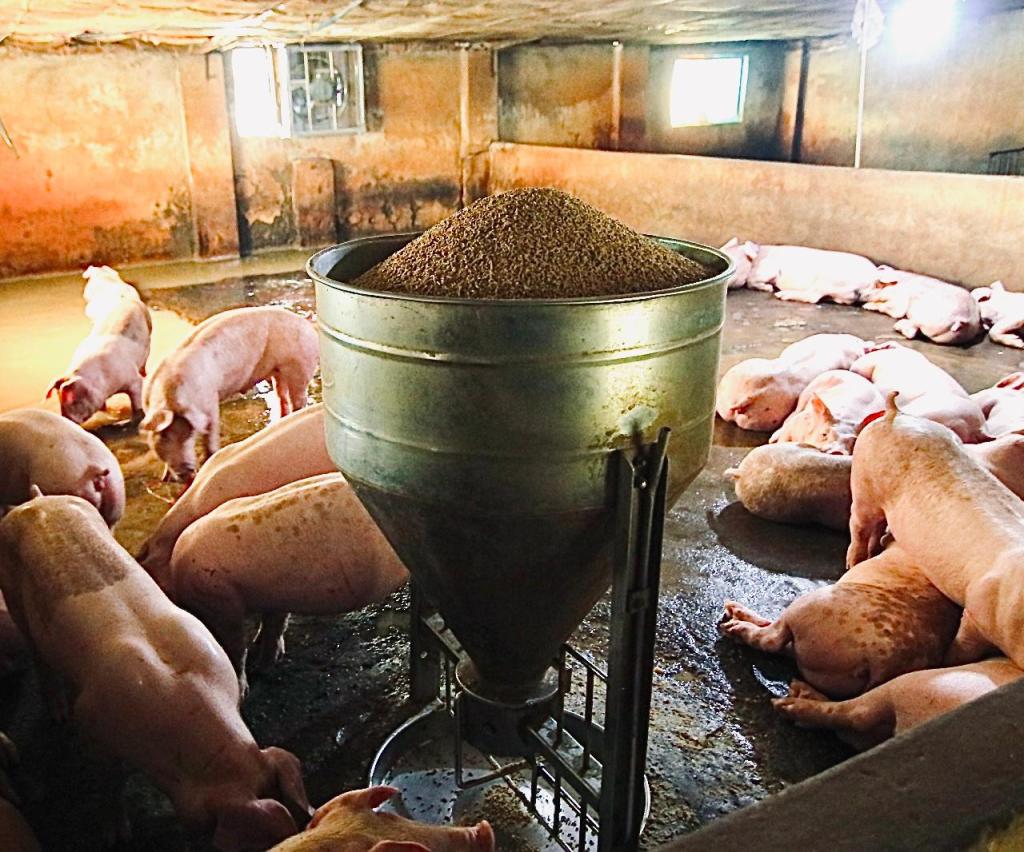
Vietnam’s feed additives market is often discussed in terms of growth rates, product launches, or supplier competition. But for pig producers, the more important shift is not how fast the market is growing — it is why additives are being used at all.
Vietnam’s feed additives market is estimated at around USD 425 million in 2025 and is projected to grow at about 5% per year toward the end of the decade. Pigs account for the largest share of demand, roughly 42%, reflecting both Vietnam’s pork-heavy protein consumption and the scale of commercial swine production. Yet the real change is happening at farm level, where additives are increasingly viewed as tools for control, not acceleration.
For many producers, the era of chasing maximum growth is fading. Today’s challenge is managing variability — in feed raw materials, disease pressure, genetics, and market prices. In this environment, inconsistency is often more costly than slightly lower peak performance.
This helps explain why some additive categories remain non-negotiable. Amino acids still account for roughly one-quarter of total feed additive value, with lysine and methionine forming the backbone of modern pig diets. With current genetics, even small formulation errors can quickly translate into poorer feed conversion and inconsistent carcass quality. As a result, producers are becoming more price-sensitive — but not less dependent — on amino acids. Precision, rather than reduction, is increasingly the strategy.
At the same time, acidifiers are the fastest-growing additive segment, expanding at close to 6% annually. Their role has evolved beyond solving visible digestive problems. On many farms, acidifiers are now used as part of baseline nutrition programs to stabilise gut health, reduce performance swings, and limit downstream health costs — especially under stress or variable ingredient quality.
What is changing most is how producers evaluate additives as a whole. Single products matter less than coherent nutrition programs. Integrated approaches — combining precision nutrients, gut-health tools, and safety buffers — are gaining ground as farms focus on predictability rather than maximum output.
In that sense, feed additives in Vietnam are becoming less about pushing pigs harder, and more about keeping systems stable. The farms adapting best are not necessarily those using more additives, but those using them with clearer intent, tighter control, and stronger technical understanding.
That shift may not look dramatic — but it is already reshaping pig production in practice.
By Ha Thu – PigTalks
 pigtalks.asia
Leave a comment