A dialogue between Pigtalks and Humane World for Animals
Interviewer: Ha Thu
Interviewees: Dr Sara Shields, Managing Director, Farm Animal Welfare Science;
and Ms Hang Le, Program Director, Southeast Asia, Farm Animal Welfare.
Group sow housing – the concept
The World Organisation for Animal Health (WOAH) defines good animal welfare as ensuring that animals are healthy, comfortable, well-fed, safe, and free from pain, fear, and distress, while also allowing them to express their natural behaviors.

“For pigs, several key welfare issues need to be addressed, including housing conditions such as confinement, pen design, stocking density, and bedding,” said Dr Sara Shields.
Other concerns involve the absence of stimulation in their environment, painful practices like castration, tail docking, and teeth clipping, as well as how animals are handled, the training of staff on welfare matters, and the conditions they face during transport and slaughter.
In Vietnam, as in many other countries, sows are often kept in gestation crates throughout their pregnancies. These metal enclosures are so cramped that the sow cannot turn around, severely restricting her movement for the entire 114-day gestation period. Such confinement greatly limits the sow’s ability to engage in natural behaviors, leading to significant physical and psychological stress.
- Is group housing a key animal welfare standard? Why?
Housing is one of the most critical animal welfare concerns in pig production. Confinement systems like gestation crates became widespread because they simplify management and allow more animals to be kept in a single facility. However, there’s now a global shift toward group housing, as keeping animals confined is increasingly recognized as inhumane.
Gestation crate confinement has serious negative impacts on the health and welfare of breeding sows. The lack of movement and exercise leads to muscle loss and weakened bones, making even basic movements difficult and increasing the risk of injury. Crated sows also have higher resting heart rates, suggesting lower physical fitness compared to those allowed to move freely. They often develop sores and injuries from rubbing against metal bars and lying on hard, barren flooring. Inactivity and reduced water intake also contribute to higher rates of urinary tract infections.
Beyond physical harm, confinement causes psychological distress. Sows frequently display abnormal behaviors known as stereotypies—repetitive actions like bar-biting or sham-chewing—that signal frustration, poor mental well-being, or neurological dysfunction. Over time, crated sows tend to become unresponsive over time, a behavioral disorder that scientists have linked to depression.
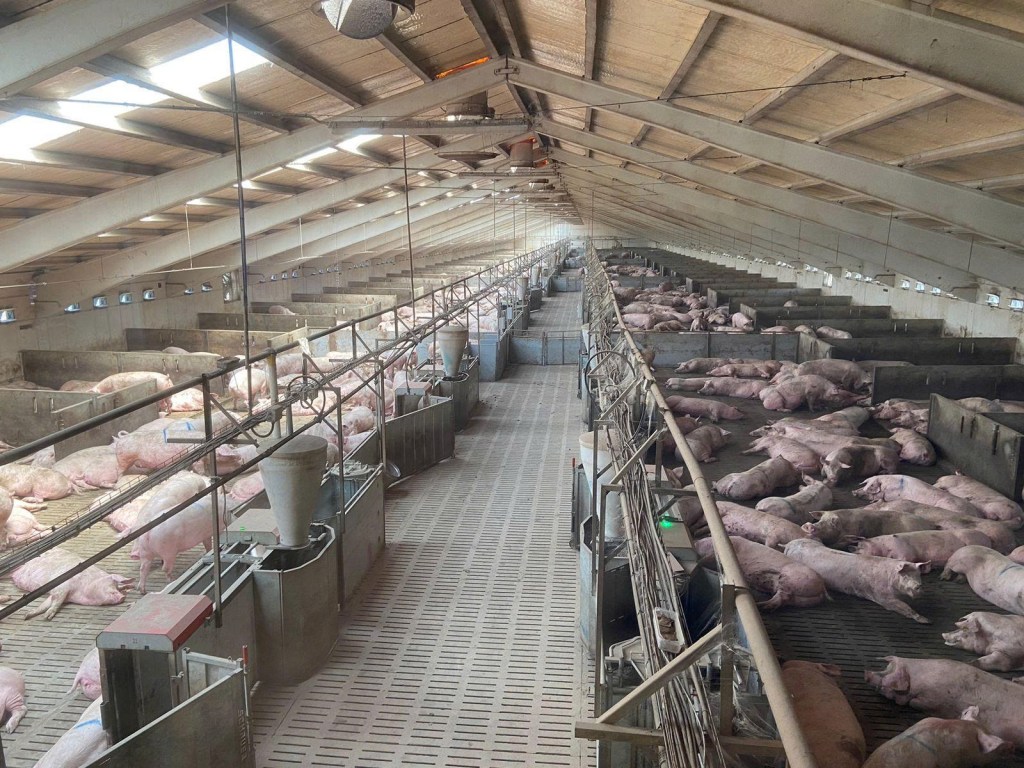
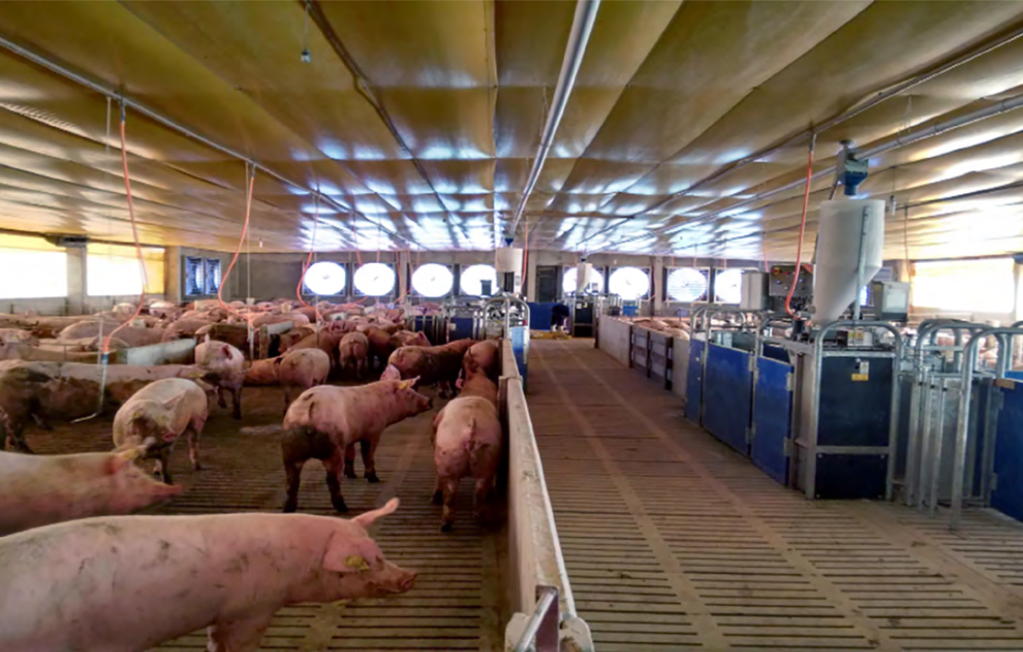
Group housing systems are a more humane alternative to crate confinement, allowing sows greater freedom of movement and social interaction. Pigs are naturally clean animals, and when given enough space, they will eat, sleep, and defecate in separate areas. Sows in group housing tend to be physically healthier because they are more active and can choose comfortable, clean places to rest. They can move away from cold drafts, huddle for warmth, or stretch out fully in relaxed lying positions. Pigs are also social animals, and many form close bonds—some sows even have preferred eating and sleeping companions.
Producers have the chance to enhance their operations by incorporating environmental enrichment and considering options like immunocastration.
- What led people to consider using crates in the past, and why has this practice become viewed as inhumane today?
Gestation crates were introduced in the 1950s and became widely adopted by the 1960s. They were designed to simplify sow management, reduce aggression between animals, and fit more pigs into limited space. However, this system also led to the decline of traditional animal husbandry skills, such as understanding pig behavior and managing group dynamics—making it harder for the industry to shift away from confinement once it became the norm. Confinement-based production was created and adopted without any concern for animal welfare.
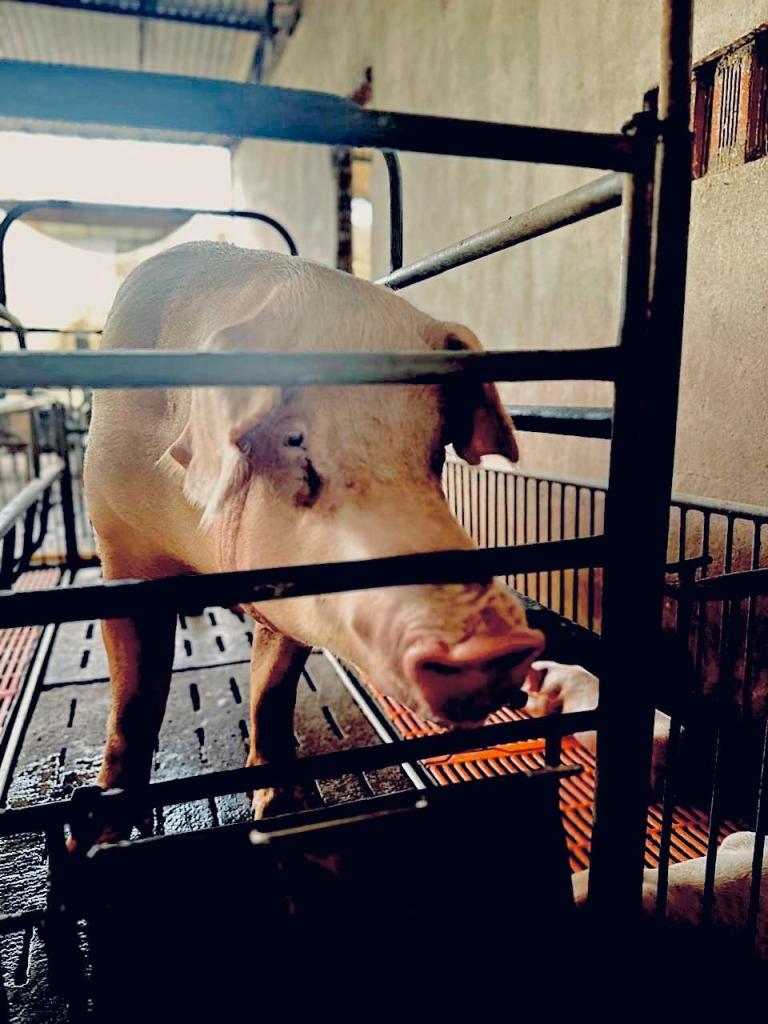
Over time, public awareness of industrial animal production grew, and with it, concern for how animals are treated. Today, consumers increasingly view gestation crates as inhumane because they severely restrict movement and prevent pigs from expressing natural behaviors. People care about how their food is produced, and there is now a strong expectation that producers adopt more humane and sustainable farming practices.
3. What about other needs for the pigs in the wild, ie, not to be threatened by other superior sows in the herd, or having access to food, and roaming freely around their territory?
Domesticated pigs are closely related to wild boar and share many of the same natural behaviors. In the wild, pigs live in matriarchal social groups, sleep in communal nests, and maintain close family bonds into adulthood. They establish a clear dominance hierarchy, but serious aggression is uncommon—subordinate pigs typically avoid conflict by keeping their distance from dominant individuals.
When pigs have enough space and access to foraging areas, they are able to express these natural behaviors, and aggression is rare among familiar group members. Providing similar conditions in farming systems—such as adequate space, enrichment, and stable social groups—helps reduce stress and supports the pigs’ physical and psychological well-being.
Technical aspects
- What pig behaviors do farm technicians need to pay attention to? Which ones are the most challenging in a group-housing system, and how can they be resolved?
In group housing systems, farm technicians should carefully observe social interactions, feeding behaviors, signs of aggression, and the overall health and comfort of the animals. Key behaviors to monitor include how sows interact during mixing (when unfamiliar animals are introduced), how they access feed and water, and whether any individuals are being bullied or excluded from resources.
Pigs are social animals that form stable hierarchies. In natural settings, they maintain close contact, synchronize their behaviors, and avoid conflict through social recognition—remembering and responding differently to familiar versus unfamiliar individuals. When group composition changes, aggression can occur as pigs reestablish social order. This was a major concern when group housing was first introduced, but today there are numerous well-functioning systems around the world, supported by significant scientific, technical, and practical advances.
Good pen design is essential for minimizing conflict. Features like escape areas or visual barriers allow subordinate animals to avoid aggressors, reducing stress and injury.
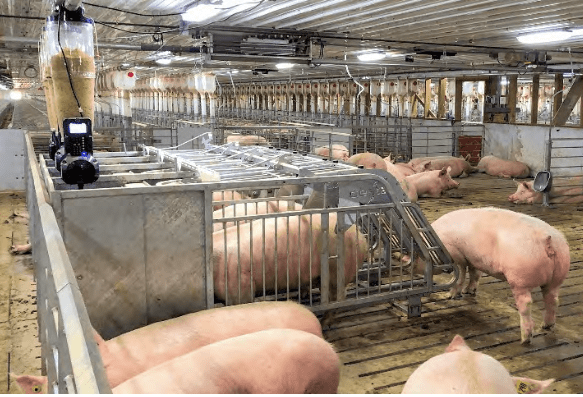
Providing appropriate environmental enrichment—such as straw, manipulable materials, or rooting substrates—is another key to supporting natural behaviors and reducing boredom or stress.
Ultimately, the success of group housing depends on good management and well-trained stockpeople. When these systems are thoughtfully designed and properly managed, aggression tends to subside quickly, and sow welfare improves significantly.
- Crates have been introduced during the nursing period to reduce the risk of sows crushing their piglets to death. But with the welfare model, crates are not used during the nursing period, so how can the risk of sows crushing their piglets to death be minimized?
In the wild, free-roaming and feral sows build nests out of leaves and branches to give birth. A warm, protected nesting site increases piglet survival, which is why nesting behavior is deeply rooted in pigs’ biology. Even in commercial systems, sows show a strong drive to nest—pawing at the floor or nosing the bars of farrowing crates. Denying them this behavior causes stress and may disrupt maternal care. Nesting is also linked to oxytocin, a hormone that supports bonding and milk letdown.
In free-farrowing systems, sows give birth in individual pens with bedding materials instead of restrictive crates. These environments support natural behaviors while still protecting piglets. In some systems, once piglets are strong enough, they can interact with other litters in group settings, more closely mirroring pigs’ natural social structures.
While free-farrowing systems have not yet been adopted in Southeast Asia, countries like Sweden, Norway, and Australia have successfully implemented them. With proper management and good pen design, studies show that piglet mortality in free-farrowing systems can be comparable to or even lower than in crate-based systems. For more information and examples, visit: www.freefarrowing.org/farrowing-systems/individual-farrowing-pens.
- Is genetic selection related to stress resilience and reduced aggression? If yes, which pig traits does HWA recommend? Which pig species is best for this purpose? (Yorkshire, Pietrain, Landrace, a crossbred between those pigs?).
All types of pig breeds can be housed in groups. That said, genetic companies are now working to produce breeding sows that are less aggressive and thrive in group housing settings.
It’s important to avoid selecting animals solely for production traits like lean growth or rapid weight gain, as this can sometimes lead to increased stress sensitivity, behavioral issues, or poor welfare outcomes.
Market aspects
- Vietnamese pig raisers are promoting their animal welfare efforts to meet export standards, but the reality is that no companies have successfully exported pork yet. Do you think they stand a chance to compete against local producers in demanding markets, where humane welfare has already been a common practice for quite some time?
The primary driver for promoting animal welfare in Vietnam currently comes from investment requirements. For example, the International Finance Corporation (IFC) has invested in three major pig producers: Mavin, BaF, and GreenFeed. Group housing for sows is one of the investment requirements. New animal production facilities last up to 30 years. Consumer demand for animal welfare changes faster than the investment life of animal production facilities; therefore, it is important for investors to think about market conditions 10 or 20 years into the future.

“As Viet Nam prepares for export market opportunities and the future animal welfare requirements that will be in place, it makes sense to build systems now that will meet the needs of those markets. Gestation crates are declining around the world, so a smart investment will be in crate-free systems,” said Ms Hang Le.
- Are consumers in Asia, particularly in a price-sensitive market like Vietnam, beginning to prioritize this aspect of pork? What is the driving force for that change in their thoughts?
While consumers may be price sensitive, they also care about how animals are treated on farms. Luckily, improving animal welfare by applying group housing does not increase the investment cost. The investment cost per sow for Gestal (an ESF equipment company) is even lower than gestation stalls.

- Which countries in Asia have successful models of animal welfare pig housing? How long has this model been in development, and what challenges have been encountered during its development?
Thailand is one of the leading countries in Asia making progress in transitioning to group housing systems for sows. Major producers such as CP and Betagro have already adopted group housing, signaling a meaningful shift toward higher animal welfare standards in the region. Transitioning takes time, as producers must learn how to design, manage, and fine-tune these systems. Some of the husbandry skills lost during the widespread adoption of gestation crates now need to be relearned—but the industry is improving as experience grows.
At Humane World for Animals, we support producers during this transition. We offer technical guidance and practical resources for those facing challenges or looking to improve their systems. Our Business Case for Pre-implantation Group Housing of Sows includes case studies from producers around the world who have successfully made the switch—demonstrating that group housing can be both economically viable and significantly better for animal welfare. Producers who adopt these systems often take pride in their operations and are well-positioned to meet the rising demand for high-welfare pork products.
If you have additional questions regarding sow grouping, feel free to reach out to Dr Sara Shields and Ms Hang Le. You can send your inquiries to us at: hathu@pigtalks.asia.
For related articles, please see:
Nuôi nái nhóm – Hiểu heo để tăng hiệu quả mô hình (https://pigtalks.asia/2025/08/21/nuoi-nai-nhom-hieu-heo-de-tang-hieu-qua-mo-hinh/)
Nuôi heo nhân đạo – Mavin chọn hướng đi riêng tăng giá trị thương hiệu https://pigtalks.asia/2025/08/21/nuoi-heo-nhan-dao-mavin-chon-huong-di-rieng-tang-gia-tri-thuong-hieu/
Pigs at ease – Branding with breeze https://pigtalks.asia/2025/08/21/pigs-at-ease-branding-with-breeze/
 pigtalks.asia
Leave a comment