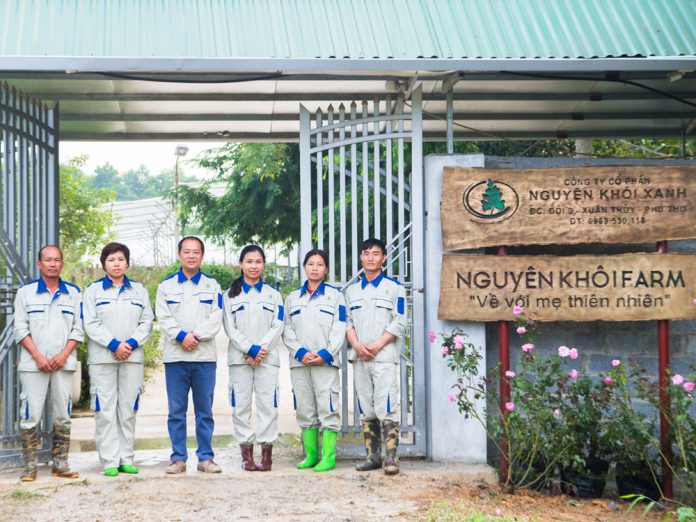
Despite the challenges posed by inflation, which has dampened overall pork demand, a medium-sized farm in northern Vietnam has remarkably managed to flourish. Their strategy? They’ve shifted focus to market segments that remain less impacted by inflation—catering specifically to higher-income and middle-class consumers.
“Catering to the needs of the wealthy and knowledgeable is quite a challenge; it requires a deep understanding of what products they want, how to create them, why they seek them out, and the best ways to connect with them,” explained Nguyen Luong Quyet, co-founder and CEO of Nguyen Khoi Green, the company behind the Nguyen Khoi Natural Pork brand.
He told Pigtalks that since its inception, Nguyen Khoi has made it a priority to establish a brand centered around clean pork products. This commitment means their products are free from antibiotics, banned substances, and additives that enhance weight and texture. To achieve this, they raise their pigs for an extended period in a humane environment, resulting in meat that boasts enhanced flavor and color. However, the production costs for sustainably raised pigs are notably higher, which results in a more expensive final product.

“Other companies may try this model, but many end up failing. We’ve faced our own failures in the past because of our uncertainties,” remarked Quyet.
In its early stages, Nguyen Khoi priced its pork close to production costs—sometimes even at a loss—out of concern that its prices would be considered too high compared to standard pork options. “Consumers in the mid and low-end markets tend to be quite sensitive to prices, even though they also prioritize health and sustainability,” Quyet explained.
To stay afloat, Nguyen Khoi undertook a complete overhaul of its production system.
Revamping the system
First, they extended their growing time. Nguyen Khoi’s pigs are raised for 8-9 months to reach a market weight of 140kg, compared to commercial pigs, which take only six months to reach a 120kg slaughter weight.
Second, they adjusted their feed. Nguyen Khoi’s feed contains fishmeal protein, corn, and sbm, mixed with fresh vegetables grown on the farm’s premises.
“We also mix herbs as natural seasonal antibiotics to prevent diseases. For example, during the hot and dry season, we use garlic; during the cold and wet season, we use galangal and ginger,” said Mr Quyet.
The ingredients are mixed, ground, and fermented. The finished feed is wet feed, which “matches the digestive characteristics of the pigs, making it easier to digest than mash feed. Fermented feed is easier for pigs to digest and reduces the odor of pig waste,” added Quyet.
Farming with welfare
Raising pigs in a welfare-friendly environment is a significant move for Nguyen Khoi, as it helps boost the overall value of their pork products.
Two years ago, they converted 25% of the total herd to a crate-free system to provide sows more space to move in, socialize, and adopt more comfortable resting postures during their pregnancies.
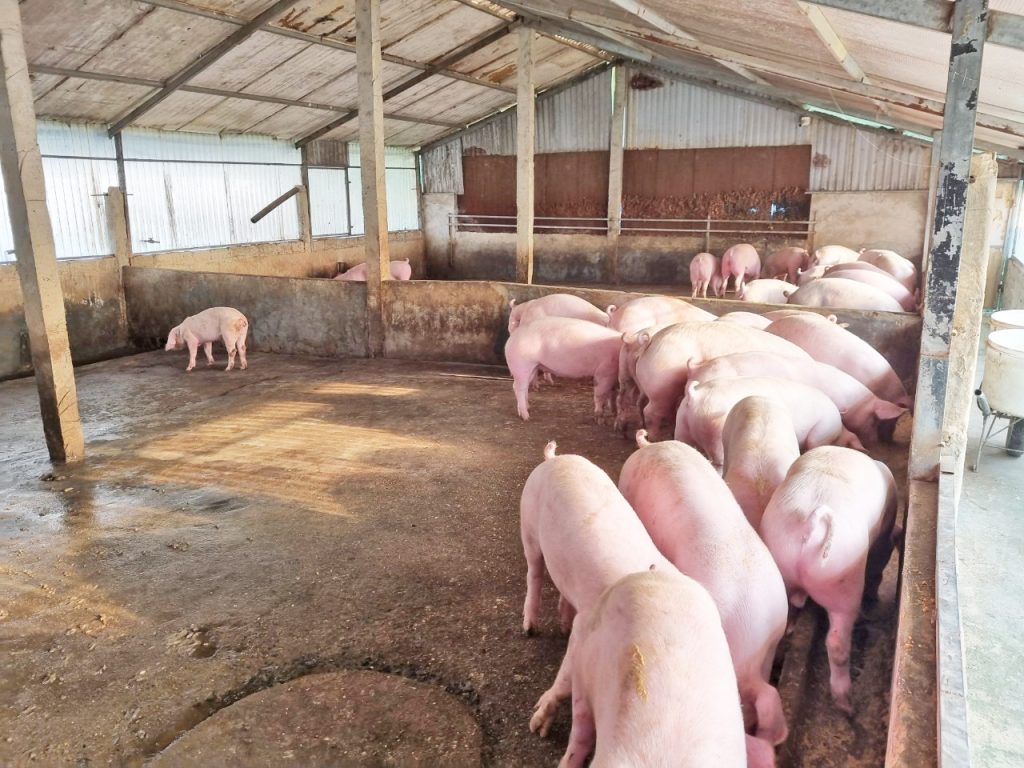
“The shift to crate-free farming requires time for our staff to adjust. We are currently training our team to gain a better understanding of the behavior of pigs and the humane farming model,” explained Mr Quyet.
However, converting to this new system is not an easy task. “The conversion costs are steep because we need to make some changes in our facilities and rebuild the entire breeding herd. Additionally, the complications from recent epidemics (Covid-19 and ASF) have made us cautious about committing to a complete transition,” explained Thao Nguyen Phuong, co-founder and COO. Despite these challenges, Thao emphasized that Nguyen Khoi remains dedicated to the goal of transitioning to group farming and is actively working on a plan to implement it soon. “We will definitely do it; it’s just taking longer than initially planned.”
Market acceptance
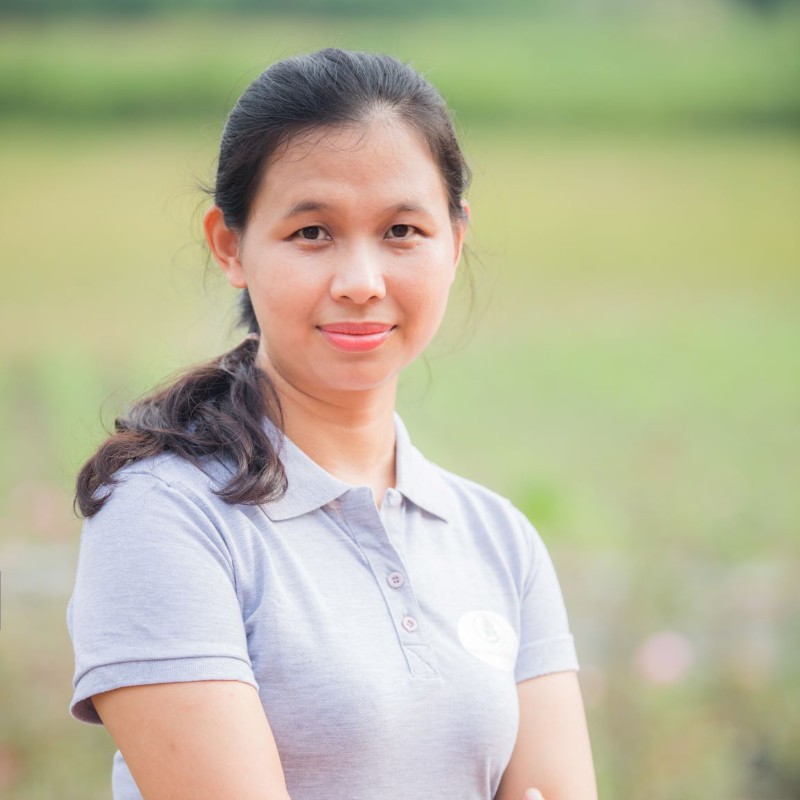
“Animal welfare is a growing global issue, and we want to do our part. We value this and believe our customers appreciate it too,” said Thao.
Three of Nguyen Khoi’s buyers in Hanoi’s neighboring provinces have committed to using 100% crate-free pork for their entire supply chains.
Xanh Sam, a grocery store in Hanoi, has committed to selling exclusively 100% crate-free pork in all their stores and future locations by 2025.
“As an organic and sustainable food store, we applaud Nguyen Khoi for this pioneering transition. This next step on animal welfare is crucial and aligns with Xanh Sam’s core values,” said Ms Lai Thi Huong, CEO and co-founder of Xanh Sam.

Zero leftover
In such a niche business as clean pork, it’s essential to carefully balance all parts of the pig to avoid overselling or underpricing. This is where carcass balancing plays a vital role. To enhance this approach, Nguyen Khoi has ventured into the processed food sector.
The most sought-after cuts are the loins and bellies, which together make up about 20% of the pig’s total weight. The less popular parts are then transformed into ingredients for processed foods, as Mr Quyet explained.
“This is the advantage of operating within a closed production chain. It offers greater flexibility in discovering markets for our products,” he noted.
Setting the price
Establishing a profitable selling price and targeting a higher market segment with value-added products is fundamental to the growth of Nguyen Khoi.
“After overhauling our production system and business model, we have successfully balanced costs with pricing. While our current prices are significantly higher than those from before the transition, we have seen that more customers are willing to embrace our products and pay the premium,” explained Quyet.
Nguyen Khoi’s pork belly is priced at USD 12.8 per kilogram, which is double the cost of regular pork.
The company distributes its products through four main channels: its own retail outlets, upscale grocery stores, kitchens in international schools, and social media platforms.
Nguyen Khoi successfully maintained its market share, as the demand for premium pork remained largely stable after the Covid-19 pandemic. “Sales have seen consistent growth each year, and we’ve naturally attracted more customers without having to invest much in advertising,” Thao noted.
“Defining the right segment is key to ensuring the success of our business model. Thanks to this, while the economy fluctuated in the past two years, we still achieved better-than-expected growth. Our most important goal in the future is to double the herd to 1000 pigs, and fast-track our transition to better animal welfare production,” said Quyet.
By Ha Thu
 pigtalks.asia
Leave a comment