
Despite three years since their introduction, ASF vaccines have yet to gain widespread acceptance. This has led various stakeholders to explore ways to advocate for the vaccine or to find solutions to mitigate the damage caused by the disease.
The first inquiry revolves around whether there is a misunderstanding about the vaccine’s effectiveness, if the communication regarding its efficacy has fallen short, or if the effectiveness itself is simply viewed as unconvincing.
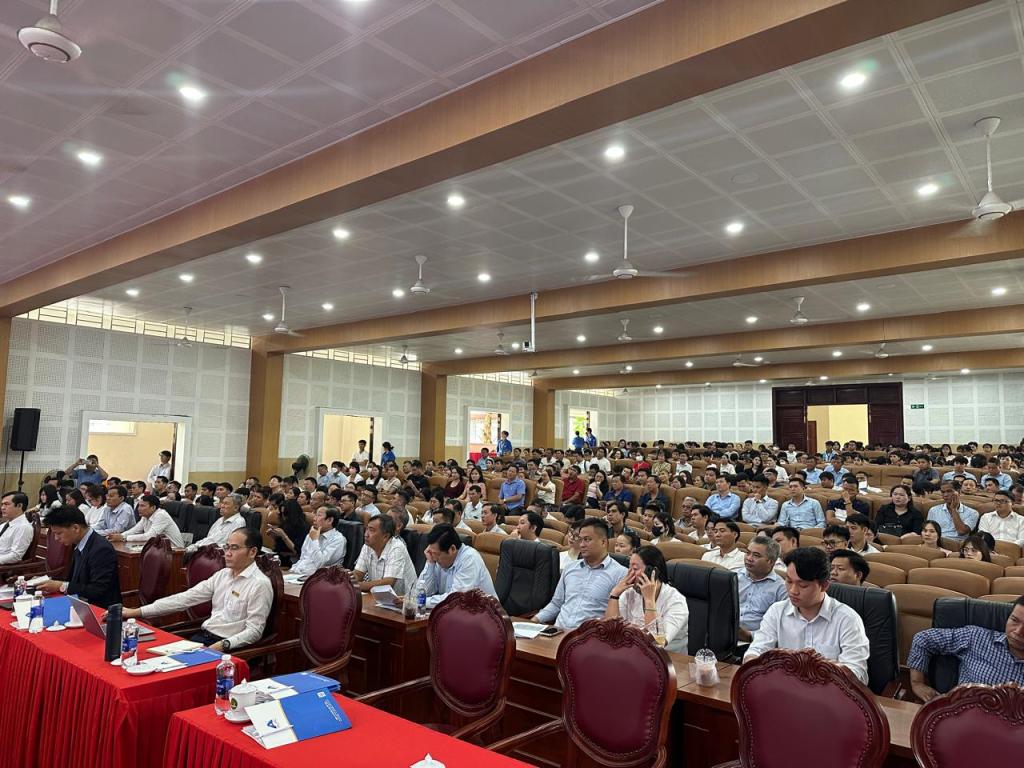
During the ASF vaccine workshop held at the end of May, General Director Nguyen Van Diep from Avac, the vaccine company, not only shared updates on the progress of vaccine development and distribution in Vietnam but also addressed a key concern: why these vaccines are not being widely adopted on farms. Professor Hai from Nong Lam University, Ho Chi Minh City, expressed worries regarding the practical effectiveness of the vaccines for disease prevention and raised questions about their safety, igniting a critical discussion on the topic.
The workshop also brought together scholars, farm technicians, and farmers, all hoping for clarity on the vaccine’s potential and to address lingering doubts surrounding its use.
Current situation of the pig industry
According to the Department of Livestock Production, by the end of February 2025, the total pig herd in the country stood at 26.8 million, reflecting a 3.2% increase compared to the same period last year. However, industry experts estimate that the actual figure may be at least 30% lower than the reported figure. During this timeframe, the price of live pigs rose significantly and remained elevated until June. The Department of Animal Health (DAH) has attributed the increase in live pig prices to two primary factors: the implementation of environmental management policies that forced both small and large farms in restricted areas to relocate or cease production; and a disease outbreak in the southern provinces during the latter months of 2024. The outbreak has had a significant impact on the breeding sow population and has been a nightmare for pig farms. Even with rising prices, the repopulation is slow due to concerns over the disease.
Currently, ASF virus (ASFV) strains with recombinant from both genotype I and II (rASFV I/II) have been detected in Vietnam, making it even more complicated to deal with this virus.
The DAH reports that the circulation rate of the recombinant strain is currently at 40%. However, many industry experts believe the actual figure is significantly lower, estimating it to be between 10% and 20%. Despite this discrepancy, the recombinant virus remains a serious concern, as current vaccines are only effective against genotype II.
Biosecurity measures, despite enhancements and increased focus, have not been demonstrated to provide an infallible barrier against this disease.
In this context, the industry is increasingly eager to embrace more practical measures for disease prevention, particularly through the development of vaccines.

What does Avac have to say?
Dr Diep stated that Avac’s ASF live vaccine has undergone extensive testing to ensure its safety, ensuring it is suitable for use in both large and small-scale farms. He emphasized that biosecurity serves as the primary line of defense, with vaccines providing an essential additional layer of protection.
Dr Diep’s presentation on the development of the vaccine contains extensive technical details. To enhance comprehension, we have compiled a separate article. Please click here to access it. (https://pigtalks.asia/2025/05/19/avac-leader-shares-the-three-biggest-challenges-in-producing-asf-vaccines/)
Avac has partnered with major companies to conduct experiments focusing on the rearing of sentinel pigs. The results showed that all groups of these pigs thrived until they reached market size, demonstrating that virus excretion in the environment is remarkably low. Avac has conducted comprehensive studies to evaluate the toxicity and efficacy of the vaccine under the supervision of prominent organizations, academic institutions, and veterinary professionals. The deployment of the vaccine in regions experiencing epidemics can assist in controlling outbreaks, thereby making it particularly well-suited for small-scale farming contexts such as those in Vietnam, where biosecurity protocols are inefficient.
When asked about the apprehensions of farmers regarding the ASF vaccine, Dr Diep indicated that these concerns primarily stem from the fact that the vaccine is manufactured by a domestic company. Vietnam’s reputation for producing veterinary drugs and vaccines is not well-established, which contributes to this hesitance. Furthermore, the fact that prominent nations, including the US and China, have announced their intentions to develop vaccines but have yet to achieve substantive progress amplifies farmers’ reservations about the safety of domestically produced vaccines. Dr Diep addressed these concerns during his presentation, highlighting the safety of the ASF vaccine currently being developed by Avac.
There is a growing confusion surrounding strains that resemble vaccine strains. Dr Diep noted that the emergence of these vaccine strains is a common occurrence when live vaccines are in circulation. However, he emphasized that those strains occurred prior to the widespread distribution of the vaccine.
Dr Diep pointed out that Avac’s current ASF vaccine provides protection only against genotype II, while it does not cover genotype I or the recombination strains that combine genotypes I and II. Furthermore, the vaccine is currently licensed solely for use in finishers, while many farmers are eager to use it for breeding pigs due to their higher economic value and greater vulnerability.
The media has also been buzzing about ineffective vaccines and their implications, which has only added to the confusion among farmers. Dr Diep acknowledged that this situation poses a significant challenge for the distribution of Avac’s vaccine. Furthermore, the price of the vaccine, set at USD 2.41 per dose, is considerably high, leading to a notable hesitation.
What does Prof Hai have to say?
Professor Hai is particularly cautious about the use of vaccines. He shared his own unpublished independent studies and observations on how the ASF virus (ASFV) affects the immune systems of pigs, and the effectiveness of ASF vaccines in safeguarding pigs from these effects.
He pointed out that while pigs infected with ASFV can develop neutralizing antibodies, this does not necessarily equate to true immunity. Immunity in pigs can vary based on the virulence of the specific ASFV strain in the field and individual responses. The gene-modified ASF vaccine only provides experimental protection against the vaccine strain itself, but it falls short against other circulating field strains or recombinant variants. The duration of protection offered by the vaccine is relatively short, leading him to conclude that its overall effectiveness remains uncertain.
Currently, distinguishing between antibodies produced by the vaccine and those resulting from field infections is not feasible. Moreover, he stressed that the ASF virus mutates rapidly and quickly regains virulence. It can also be transmitted vertically through the fetus, resulting in a carrier state.
Prof Hai and his team have observed that ASFV-specific cellular immunity diminishes following viremia and is undetectable after recovery or prolonged immunization. Additionally, pigs infected with ASFV may exhibit viremia; however, they can also serve as carriers or remain latently infected, with the virus being detectable solely in tissues typically targeted by ASFV.

What do pig producers say?
Farmers hold two markedly different views on the vaccine. One group strongly believes that the primary focus should be on ensuring biosecurity to guard against not only ASF but also other serious diseases. They argue that introducing vaccines could lead to the introduction of pathogens into previously clean farms. This group insists that vaccines require further refinement and rigorous evaluation, particularly emphasizing the need for data on their effectiveness in real-world field conditions rather than just controlled experimental settings.
A CEO of a prominent pig farming company, who prefers to remain unnamed, shared that they have invested heavily in enhancing and maintaining both internal and external biosecurity measures, which now provide protection for up to 85% of their pig herd. However, they express doubt about whether vaccines can reliably cover the remaining 15%. Consequently, they view the costs associated with vaccines as impractical in their current context.
An alternative perspective, particularly from independent farms that have faced outbreaks, suggests that while biosecurity measures can be effective, they are not infallible. In this light, the use of vaccines emerges as a valuable means of bolstering protection. Much like the Covid vaccines, which, although not perfect, have proven essential during critical times, implementing a vaccine could significantly help address the current high pork prices driven by disease threats.

During our conversations with several farmers who participated in the workshop, they shared their experiences with the vaccine. They had previously administered it on their farms when the pigs were already infected, but unfortunately, it did not save their animals. After attending the workshop, these farmers have decided to change their approach and will begin using the vaccine earlier, specifically before their pigs show any signs of infection, aiming to prevent the disease altogether. They mentioned that the cost of the vaccine isn’t a concern for them; what they truly seek is a reliable guarantee that it will effectively protect their pigs.

Other opinions
Professor Do Tien Duy of Nong Lam University, a prominent scholar with years of experience in investigating viruses through both laboratory and field research, emphasizes the importance of considering multiple factors when assessing vaccine effectiveness. Specifically, with ASF vaccines, our understanding of the virus remains limited. “This virus has a complex and unstable structure, allowing it to rearrange and recombine in ways that may enhance its virulence. Consequently, developing a vaccine based on a gene-altered virus comes with considerable risks,” he explained, emphasizing that a thorough evaluation of these vaccines is necessary before moving forward.
One perspective for reference is the timeline of vaccine development, such as with the PRRS vaccine, which offers insights after ten years. Initially, the PRRS vaccine faced numerous challenges due to viral mutations that resulted in highly virulent strains causing significant harm. However, the pig industry has since adapted to coexist with PRRS, managing effectively without widespread vaccine use, opting instead for strategic and specific applications only when necessary.
“We need to consider the question: should we prioritize a safe vaccine or a secure pig industry? The key is not to rush out a vaccine immediately, but rather to take a long-term, sustainable approach to the safety of the pig industry,” said Prof Duy.
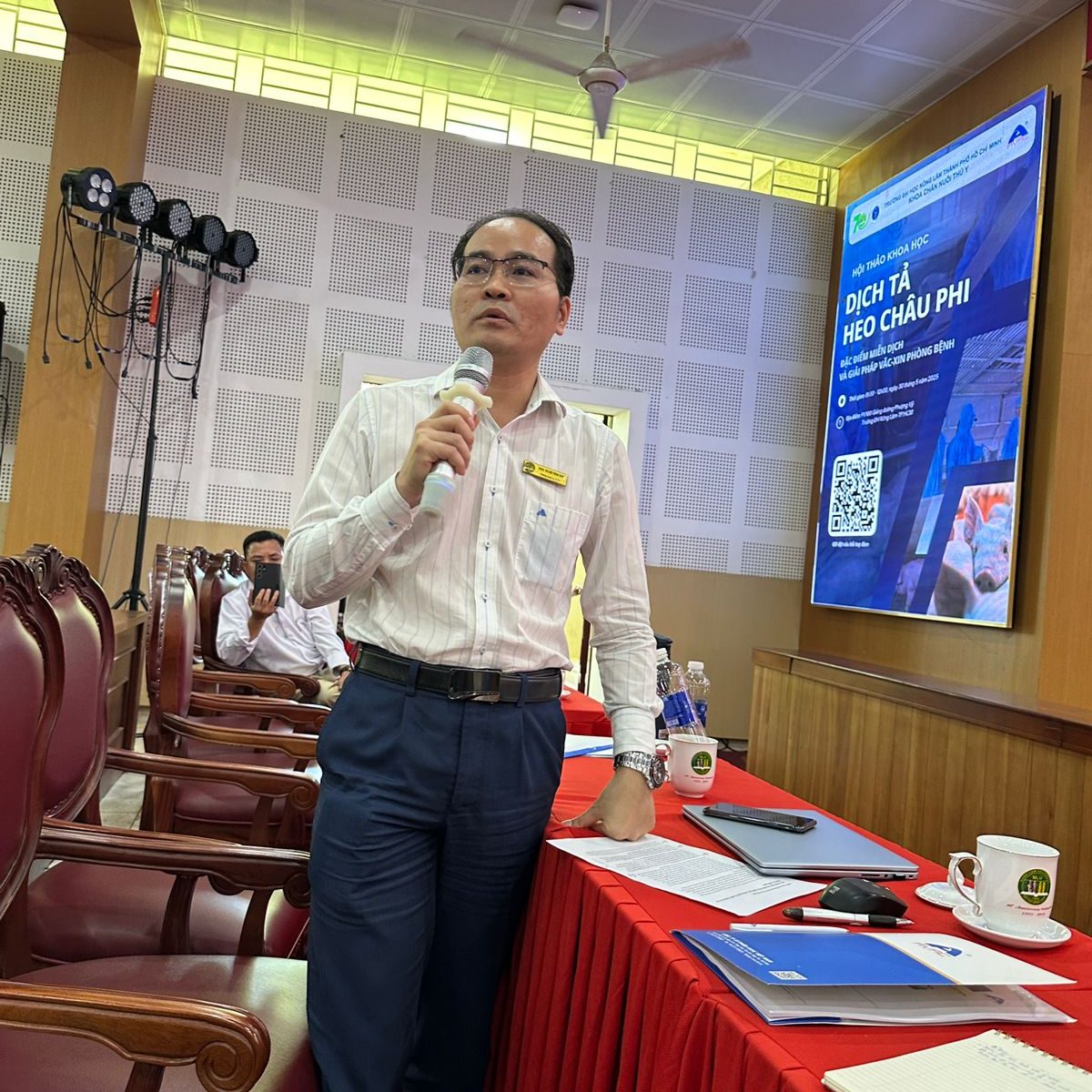
Prof Duy’s second conclusion highlights that the deficiencies in biosecurity on farms frequently arise from inadequate and incomplete practices. The understanding and application of biosecurity measures remain significantly misconstrued and poorly implemented. Nevertheless, he expresses optimism that, over time, farms will address and rectify these gaps in knowledge and practice.
In conclusion, when it comes to the concerns about deploying the ASF vaccine, it’s evident that building trust among farmers is a major challenge. Many are left in the dark regarding the vaccine’s effectiveness and are eager for clarity. They want to know: Is this vaccine trustworthy? Which farms have successfully implemented it, and what results have they seen in their pigs? It’s crucial to recognize that they aren’t looking for complex technical details; instead, they are seeking reassurance from fellow farmers who have firsthand experience with the benefits.
In light of the challenges posed by the emergence of low-quality vaccines, clear and honest communication from companies and relevant stakeholders becomes more crucial than ever. Workshops can be excellent venues for fostering understanding and building connections. Moreover, the active involvement of veterinary agencies and related departments is essential to ensure the clarity and transparency needed for this vital vaccine, which is pivotal for the wellbeing of our livestock industry. By working together, we can establish the trust and confidence that farmers require to fully embrace this important advancement.
By Ha Thu – Pigtalks
 pigtalks.asia
Leave a comment