
By Ha Thu
Pig smuggling is becoming a big issue in Southeast Asia. It becomes a more serious health control issue when all countries involved in buying, selling, and smuggling pigs across borders, such as Vietnam, Cambodia, and Thailand, are heavily affected by ASF.
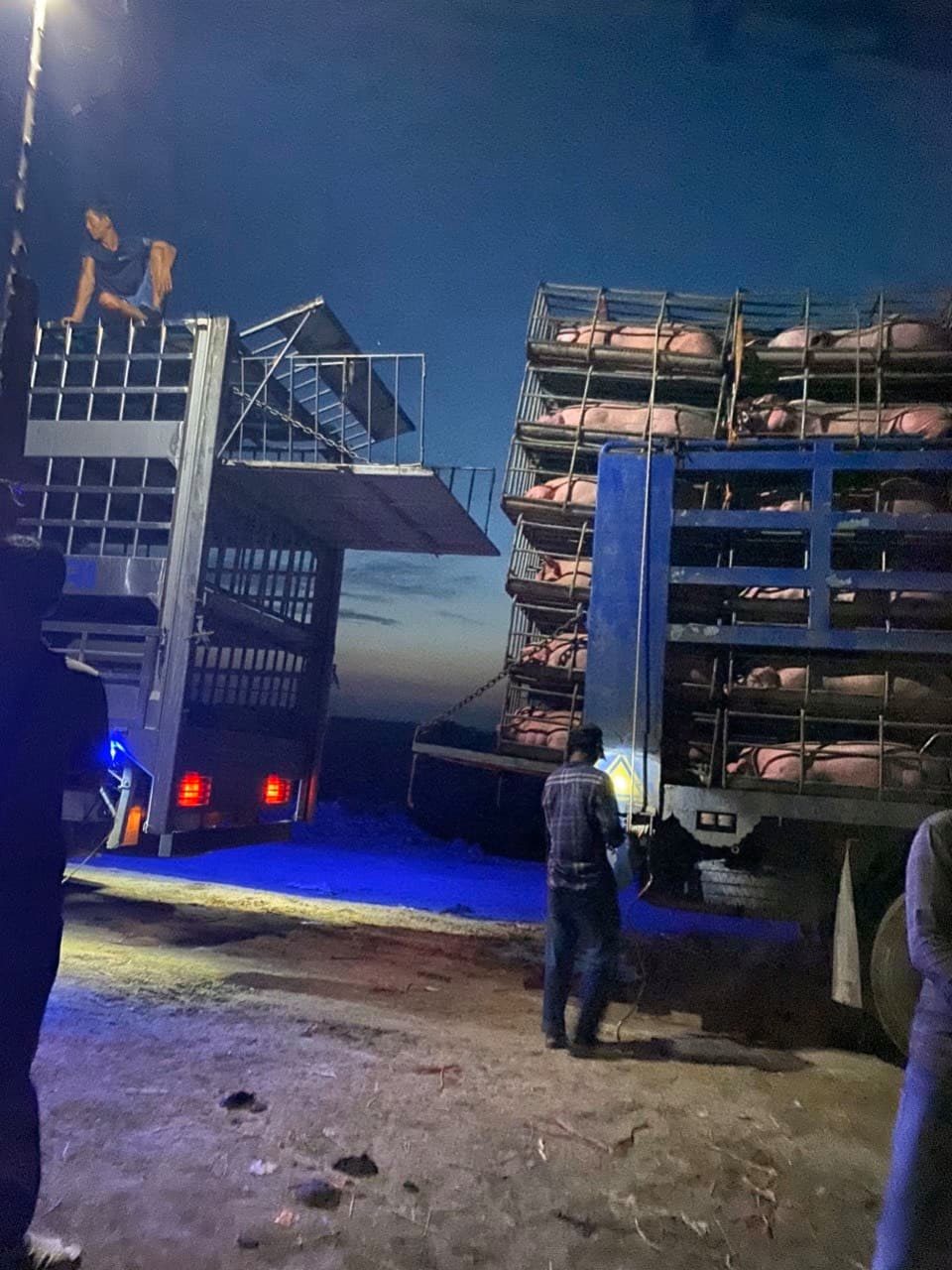
Currently, every day about 7000 pigs cross border trails from Cambodia to Vietnam. It is unclear whether these pigs are quarantined or not, but many believe they are not quarantined and are brought directly to wholesale markets.
Farmers said that pig smuggling increases the risk of disease spread, affecting domestic production. However, the question is whether buying, selling, and transporting illegal pigs really spreads the disease, and specifically through what route?
What does WOAH say?
The cross-border trade of live pigs ranks the first among 14 transmission pathways examined by WOAH. In its report on ‘ASF Cross-Border Risk Assessment: South-East Asia Scientific Report’, WOAH stated the trade of live domestic pigs was frequent between participating countries as well as from countries outside Southeast Asia.
While live domestic pigs were imported mainly from ASF-free countries, the terrestrial trade was also made between countries with ASF cases, such as from Vietnam to Cambodia, despite several trade bans being imposed due to the changes in the regional ASF situation.
In Cambodia, pigs are sampled and tested for ASFV if they show clinical signs. However, laboratory tests at the customs and health certificate information were not reported by WOAH’s country risk assessment teams (CRATs).
In general, the CRATs considered that their national ASF prevention and control programmes (for example, the application of trade bans upon reporting of ASF outbreaks in exporting countries) were sufficient for maintaining the overall risk by this risk pathway below or to the agreed acceptable level. Therefore, they did not see the need for introducing additional risk mitigation measures for importing live domestic pigs. However, no CRATs provided information on how their national ASF prevention and control programmes were evaluated.
What does an expert say?
“Transportation is the most important transmission route,” Klaus Depner, Senior Scientific Officer for International Animal Health at Germany’s Friedrich-Loeffler Institut, told me.
Dr Depner is also a consultant in pig farming biosecurity, who has rich experiences in cross-border disease transmission and wild boar control in Europe. He said trucks may carry pathogens from the sick pigs from the transportation and bring them to naive farms. Slaughterhouses are also a pool of pathogens and trucks may carry the virus from here.
“ASF spread in no time in the trunks of cars to all parts of the country and across the borders. If you look at an epidemic map from 2007 or 2008, you will clearly see that most of the disease outbreaks are registered, like pearls on a string, along the major rural roads,” he said.
Where people drove cars, ASF also occurred. ASF has not spread rapidly from animal to animal or barn to barn, but at the speed of a vehicle or aircraft from region to region.
Protect your pigs and customers via pork station
Pork station may be a solution that helps producers ensure only healthy pigs are delivered to the consumers and avoid disease transmission from the barns to slaughterhouses and vice versa.
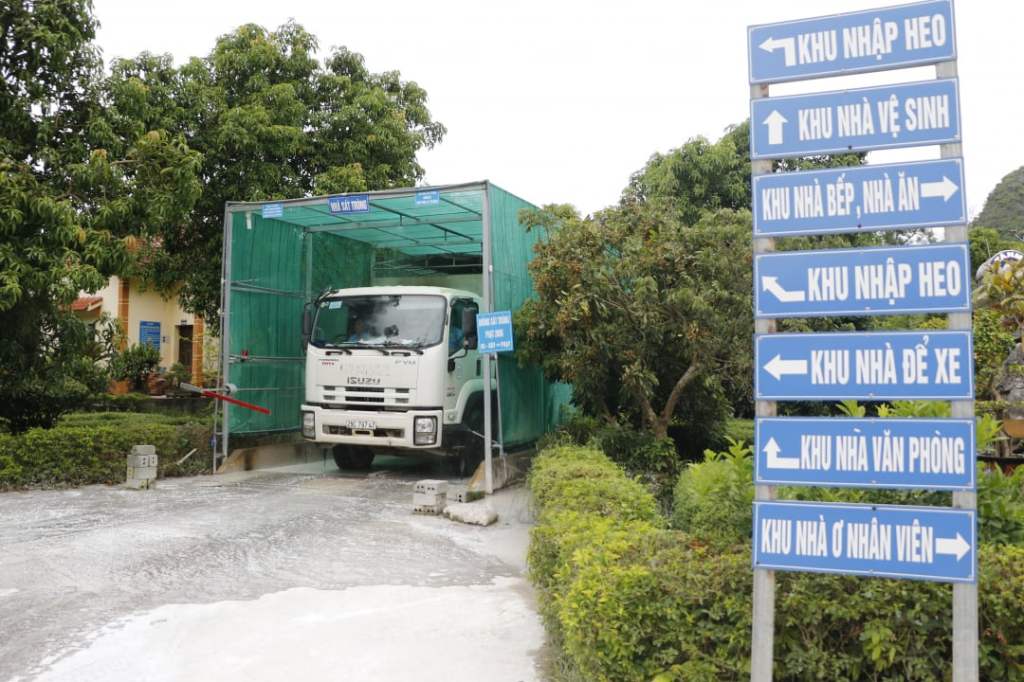
In Vietnam, companies such as Japfa Comfeed, Mavin Group, and CP Vietnam have implemented pork stations. Most of them were built after the occurrence of ASF (2019).
“The purpose of the pig transfer station is to stop the spread of pathogens into the farm from exporting pigs (reducing export time, reducing the number of trips, reducing selection),” Mavin Group said in an email interview.
Mavin’s pork stations are placed in locations far from the company’s farms. They receive pigs using the company trucks and check the pigs’ health status before sending them to the customers (slaughterhouses).
The station made sure the pigs underwent health checks and guaranteed to meet food safety standards. The pigs that don’t meet our standards will be culled at the station.
“Thanks to this initiative, we make sure the disease transmission is disrupted before it enters the slaughterhouses, and all of our pigs are qualified when they reach our customers,“ said the company.
Click here for WOAH’s Scientific Report on “African Swine Fever Cross-Border Risk Assessment: South-East Asia”
 pigtalks.asia
Leave a comment